RU
RU EN
EN CN
CN


In the label printing industry, water-based inks and UV inks are the two most mainstream environmentally friendly printing consumables, widely used in self-adhesive label fields such as daily chemicals, food and beverage, pharmaceuticals, electronics, and daily care. From the perspective of flexographic printing, let’s compare water-based inks and UV inks in terms of comprehensive performance, cost-effectiveness and suitability for label printing.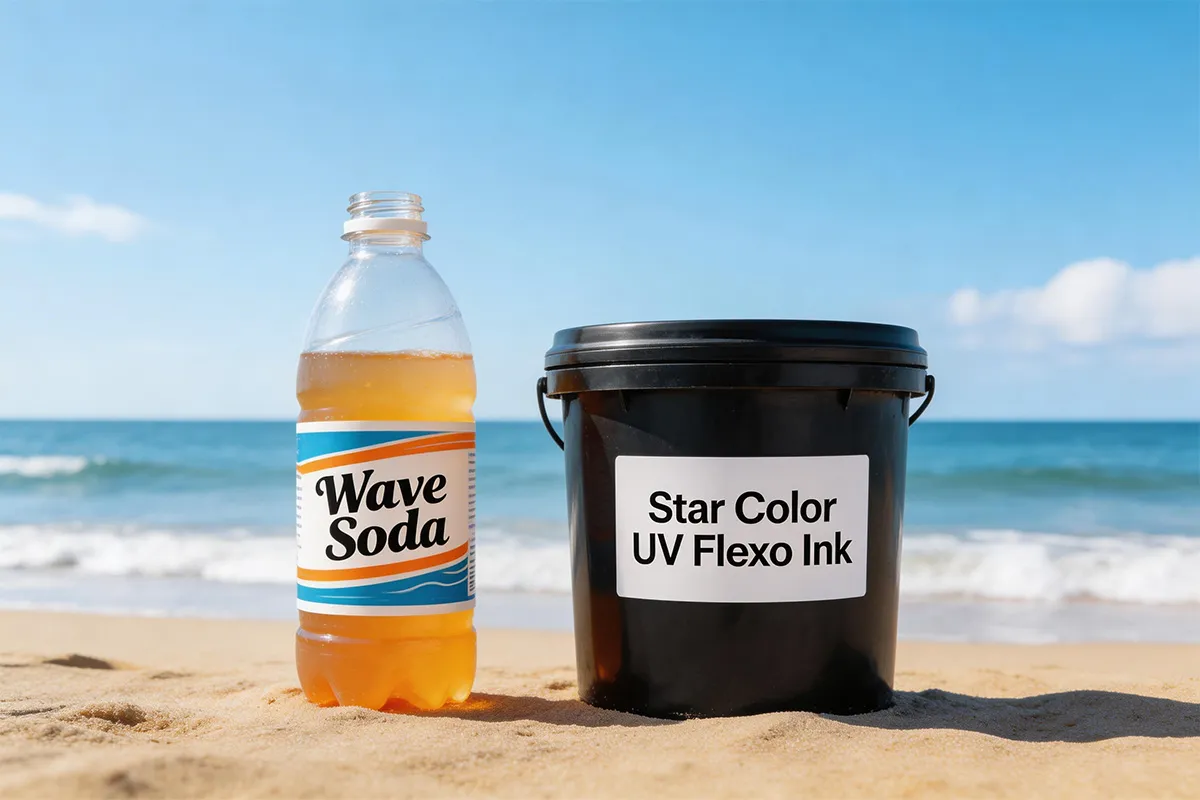
1. Core Difference in Curing Principle
Water-based Label Ink
It uses pure water as the dilution carrier, forms an ink film and cures through hot air drying and infrared water evaporation, belonging to physical drying mode.
UV Label Ink
Solvent-free with photosensitive resin as the main component. It undergoes instantaneous photochemical reaction under UV light irradiation for rapid cross-linking curing without water volatilization.
2. Comparison in Eight Dimensions
1. Environmental Protection & Safety
Water-based Ink
VOC content below 1%, extremely mild odor with no pungent smell; compliant with environmental standards for food contact, maternal and infant, and pharmaceutical labels. It creates a friendly workshop environment and is non-flammable. The minor disadvantage is a small amount of wastewater generated during production requiring sewage treatment.
UV Ink
Zero VOC emission and no waste gas pollution; no wastewater generated with simple environmental management. Ordinary UV ink has slight raw material odor. High-end food-grade UV ink requires low-migration and low-odor customized formula with slightly higher cost.
2. Production Efficiency
Water-based Ink
Reliant on drying tunnels and greatly affected by temperature and humidity with slow drying speed; prone to smudging and adhesion on rainy and humid days. Suitable for production speed of 80–300 meters per minute.
UV Ink
Instant UV curing, fully dried immediately after printing, not affected by temperature, humidity or weather conditions. Production speed can exceed 500 meters per minute, supporting high-speed inline printing, varnishing, hot stamping, die-cutting and rewinding. Ideal for mass bulk orders.
3. Printing Effect
Water-based Ink
Soft ink layer with natural and mild color tone and medium dot reproduction; suitable for minimalist, literary and ordinary civilian labels. Prone to faint printing and slight edge bleeding in large solid color areas.
UV Ink
High gloss, strong color saturation with bright and full tones; fine dot restoration and sharp lines, supporting tiny fine text, gradient colors, premium spot colors, matte and embossed special processes with higher visual grade.
4. Substrate Compatibility
Water-based Ink
Performs excellently on absorbent substrates such as coated paper, matte silver paper and ordinary paper self-adhesive labels.
Weak adhesion on non-absorbent films like PET, PP, PE and synthetic paper; corona treatment or primer coating is mandatory.
UV Ink
Universal for all substrates: paper, PET, PP, BOPP, synthetic paper, laser film and aluminum foil labels can all achieve firm adhesion without complicated pre-treatment, compatible with all mainstream high-end label materials.
5. Rub Resistance & Water Resistance
Water-based Ink
Soft ink layer with average performance in rub resistance, water resistance, alcohol resistance and oil resistance; not suitable for outdoor exposure, cold chain, daily chemical oil-stained surfaces and labels requiring frequent wiping.
UV Ink
Dense and hard cured ink layer with outstanding performance in scratch resistance, water resistance, alcohol resistance, acid and alkali resistance, oil resistance and weather aging resistance. It remains non-peeling and non-fading for long-term use on outdoor, daily chemical care, chemical and cold chain labels.
6. Equipment Requirement & Initial Investment
Water-based Ink
Compatible with traditional flexo and letterpress label machines, only equipped with ordinary hot air drying tunnels; low equipment renovation cost, old machines can be put into production directly.
UV Ink
UV curing system (mercury lamp or LED-UV) must be installed with high equipment modification cost; poor compatibility with old machines, higher fixed asset investment than water-based ink.
7. Application Cost & Consumption Loss
Water-based Ink
Lower unit price, diluted only with pure water; energy consumption mainly for hot air drying, lower comprehensive cost for small-batch orders.
UV Ink
Higher procurement unit price, regular replacement of UV lamps required with certain energy consumption for curing.
3. Comparison Table: Water-based Label Ink VS UV Label Ink
| Comparison Dimension | Water-based Label Printing Ink | UV Label Printing Ink | Advantage Side |
|---|---|---|---|
| Environmental Protection & Odor | Low VOC, mild odor, safer for food grade | Zero VOC, no wastewater, slight odor for regular grade | Food & medical: Water-based; Zero emission: UV |
| Drying Method | Hot air / infrared evaporation, affected by temperature & humidity | Instant UV curing, not affected by climate | UV Ink |
| Production Speed | Medium & low speed, not for high-speed inline | Supports high-speed inline production with high efficiency | UV Ink |
| Gloss & Texture | Matte soft, natural color tone | High gloss & saturation, fine premium dots | UV Ink |
| Substrate Adaptability | Only suitable for absorbent paper substrates | Universal for paper, film and synthetic paper | UV Ink |
| Adhesion Performance | Excellent on paper, easy peeling on film | Strong stable adhesion on all materials | UV Ink |
| Rub / Water / Weather Resistance | Average performance, easy scratch and fading | Excellent anti-scratch, water, chemical and weather resistance | UV Ink |
| Initial Equipment Investment | Low investment, old equipment available | UV system required, higher investment | Water-based Ink |
| Daily Unit Cost | Low ink price, water dilution & low cleaning cost | Higher ink price, regular UV lamp replacement | Water-based Ink |
4. Final Selection Conclusion: Which Is Better?
1. For low investment, ultra-low odor, ordinary paper labels and small-batch scattered orders
Priority to choose water-based label ink — cost-effective, eco-friendly and safe, suitable for traditional low-speed production lines.
2. For high-end daily chemicals, beauty, electronics, outdoor labels and mass film / synthetic paper substrates
Priority to choose UV label ink — leading in printing texture, adhesion, durability and production efficiency, more cost-effective for long-term mass production.
3. Production in humid areas or rainy seasons with high risk of smudging and moisture adhesion
Directly choose UV ink, stable production without being affected by environmental humidity.
4. High hygiene standard labels for food contact, maternal & infant and pharmaceutical industries
Select food-grade water-based ink or low-migration food-grade UV ink according to customer compliance requirements.