RU
RU EN
EN CN
CN


Which Ink Is Used for Flexo Printing? | 2026 Guide
Date: Aug 18 2024 From: Star Color Views:
At the heart of every high-quality flexo print job is flexo printing ink. The type of ink you choose directly impacts print clarity, color consistency, adhesion, drying speed, regulatory compliance, and overall production efficiency.
In this guide, we break down the main types of inks used for flexo printing, their properties, applications, pros and cons, and why eco-friendly formulations are becoming the global industry standard.
Types of Inks Used in Flexo Printing
Flexo inks are specially formulated to match the fast-transfer nature of flexographic presses. They fall into four primary categories, each designed for specific substrates, production speeds, and end-use requirements.1. Solvent-Based Flexo Inks
Solvent-based flexo inks consist of pigments, resins, organic solvents, and performance additives. They are known for fast evaporation and rapid drying, making them ideal for high-speed printing lines.Key Features:
- Excellent adhesion to non-porous substrates
- Strong weather resistance and color stability
- Fast drying for high-volume production
Limitations:Higher VOC emissions, stricter environmental regulations, and reduced favor in food-sensitive applications.
2. Water-Based Flexo Inks
Water-based flexo inks use water as their primary carrier, with minimal co-solvents. They are the most environmentally friendly option and the fastest-growing segment in modern flexo printing.Key Advantages:
- Low VOC emissions and safer for workers
- Excellent print performance on paper, cardboard, and corrugated materials
- Compliant with food packaging regulations
- Easy cleanup and reduced production waste
Today, water-based ink is the most widely used ink for flexo printing due to safety, sustainability, and global regulatory trends.
3. UV-Curable Flexo Inks
UV flexo inks cure instantly under ultraviolet light, transforming from liquid to solid in milliseconds. They deliver premium surface finish and durability.Key Benefits:
- Instant curing, enabling ultra-high-speed printing
- High gloss, abrasion resistance, and chemical stability
- Zero solvent emissions and minimal waste
- Superior performance on synthetic films and specialty substrates
Considerations:Requires UV curing equipment, which increases initial investment cost.
4. EB-Curable Flexo Inks
Electron beam (EB) inks use electron-beam energy for curing. They offer extreme stability, low energy use, and ultra-high performance for specialized applications.Key Features:
- Consistent curing without photoinitiators
- Excellent for heat-sensitive substrates
- Extremely low environmental impact
Comparison of Flexo Printing Inks
| Ink Type | Best For | Key Advantages | Disadvantages |
|---|---|---|---|
| Solvent-Based | Non-porous films & plastics | Fast drying, strong adhesion | Higher VOCs, regulatory restrictions |
| Water-Based | Paper, labels, food packaging | Eco-friendly, food-safe, low VOCs | Slightly longer drying on non-porous films |
| UV-Curable | High-end labels & premium packaging | Instant cure, high durability | Higher equipment cost |
| EB-Curable | Specialty & high-end printing | Ultra-stable, eco-friendly | Limited availability, high cost |
The Future of Flexo Printing Inks
Global demand for safer, more sustainable packaging is reshaping the flexo industry. Traditional solvent-based inks are gradually being phased out due to stricter environmental rules.Water-based flexo inks now lead the market for their safety, compliance, and versatility. For high-end applications, UV and EB inks continue to grow. Eco-friendly, low-migration, and food-grade formulations are no longer optional — they are essential for global market access.
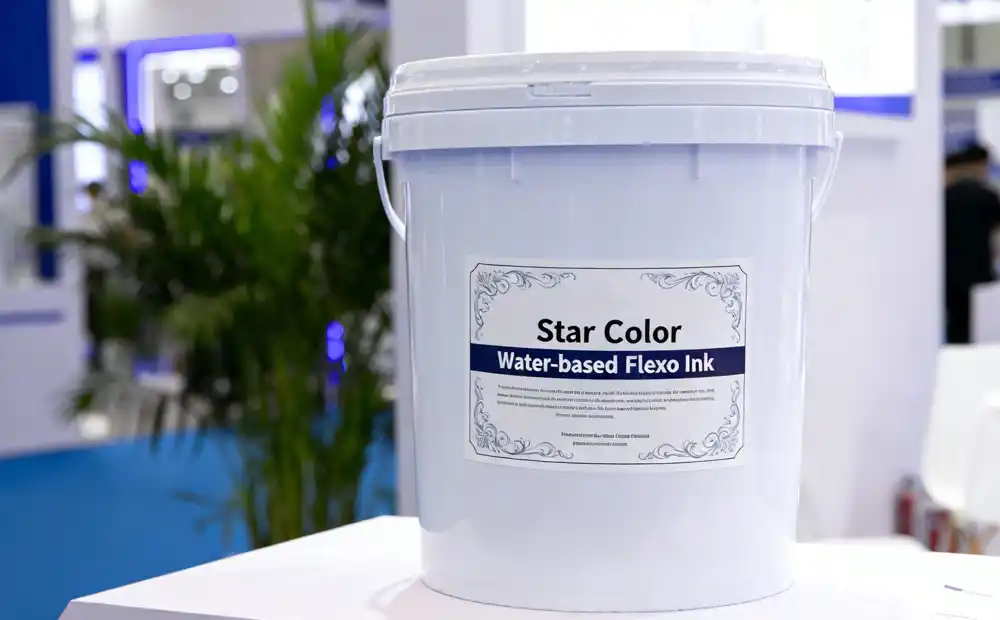
Why Choose Huizhou Star Color Technology?
Huizhou Star Color Technology Co., Ltd. is a professional manufacturer focused on high-performance water-based flexo inks. With years of R&D and manufacturing experience, we provide safe, stable, and eco-friendly ink solutions for packaging, labels, food containers, and medical packaging.Our products meet strict international standards including:
- REACH
- RoHS
- Food contact safety requirements
- Low VOC emissions