RU
RU EN
EN CN
CN

With the global promotion of environmental protection policies and the upgrading of printing technology, UV LED curing technology has gradually replaced traditional mercury lamp UV curing technology, becoming the core supporting technology in non-woven fabric, flexible packaging labels, and food packaging printing. Its characteristics of low energy consumption, instant curing, no ozone pollution, and long service life bring profound impacts on ink formulation, performance, and application effect, which is worth in-depth analysis for printing enterprises.
This article focuses on the core mechanism of UV LED curing, systematically analyzes its impact on UV ink performance, combines practical application scenarios, points out common problems and root causes, and puts forward targeted solutions, providing professional technical guidance for enterprises to optimize ink selection and application.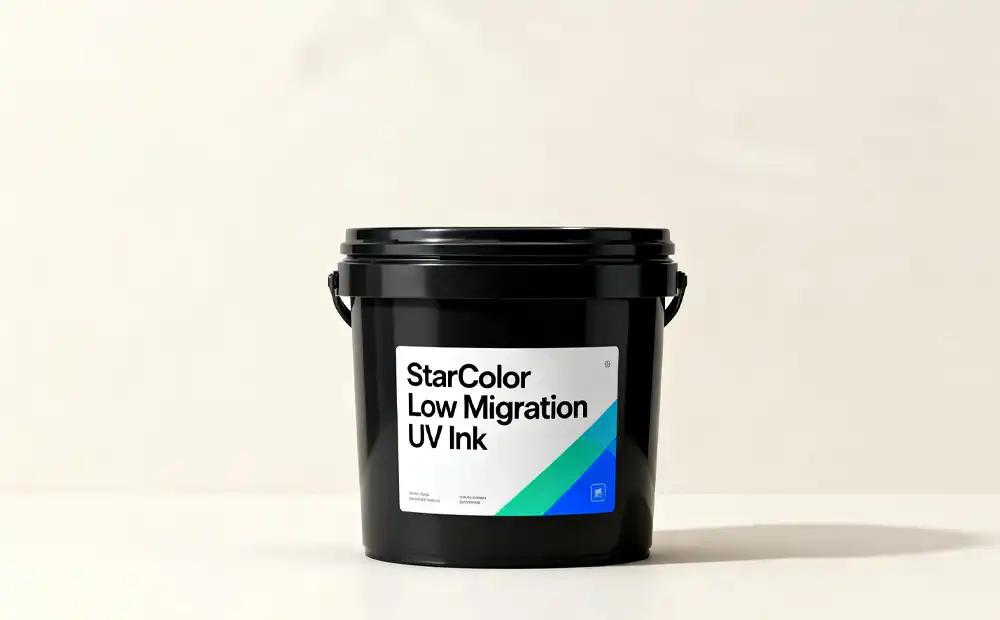
1. Core Mechanism of UV LED Curing and Its Differences from Mercury Lamp Curing
UV LED curing relies on light-emitting diodes to emit monochromatic ultraviolet light (mainly 365nm, 385nm, 395nm), which makes photoinitiators in ink decompose to generate free radicals, triggering cross-linking polymerization of ink monomers and prepolymers, realizing instant curing (0.1-0.5 seconds) without preheating.
Compared with traditional mercury lamp curing, UV LED has obvious differences: it emits concentrated monochromatic light (mercury lamps emit polychromatic light 200-450nm), requiring ink photoinitiators to match LED wavelength; it has high energy utilization rate and low heat radiation (substrate surface temperature ≤40℃), avoiding substrate deformation; it produces no ozone or mercury pollution, meeting environmental requirements; its service life (20,000-50,000 hours) is 5-10 times that of mercury lamps, reducing maintenance costs. These differences determine its unique requirements for ink formulation.
2. Impact of UV LED Curing on Printing Inks
2.1 Impact on Curing Efficiency
UV LED curing greatly improves printing efficiency with instant curing, adapting to high-speed printing (60-200m/min) for non-woven fabric and flexible packaging, and its energy consumption is only 30-50% of mercury lamps. However, its efficiency depends on ink-substrate matching: mismatched wavelength between LED and ink photoinitiator, excessive ink layer thickness (over 10μm), insufficient LED power (below 80W/cm), or too fast printing speed will lead to slow or incomplete curing.
2.2 Impact on Ink Film Performance
UV LED’s concentrated wavelength and uniform energy form a dense, uniform ink film with higher hardness (pencil hardness 2H-4H), better wear resistance (dry/wet friction ≥500 times), and stronger weather resistance than mercury lamp curing. Its low heat radiation avoids ink film yellowing and brittleness. Improper operation (insufficient/excessive curing energy, mismatched ink formulation) will cause poor hardness, brittleness, cracking, or yellowing.
2.3 Impact on Ink Adhesion
For difficult-to-bond substrates like non-woven fabric (PP) and flexible packaging films (PE, PET), UV LED’s instant curing helps ink anchor on fiber surfaces and penetrate gaps, enhancing adhesion. However, using ordinary mercury lamp UV inks, insufficient substrate pretreatment (corona value below 38dyn), or incomplete curing will lead to ink peeling. PU modified resin inks have better flexibility and adhesion, suitable for flexible substrates.
2.4 Impact on Environmental Performance
UV LED inks are solvent-free, producing no VOC emissions (complying with EU VOC limits <30g/m²) or ozone pollution. They can be formulated as low-migration products, free of heavy metals and prohibited aromatic amines, complying with EU REACH, US FDA, and China GB 38507-2020 standards, suitable for food, medical, and sanitary printing.
2.5 Impact on Ink Formulation and Cost
UV LED inks need wavelength-matched photoinitiators (5-10% of formula) and modified resin systems, increasing unit price. However, their high curing efficiency (ink utilization rate 95%) and low energy/ maintenance costs reduce long-term comprehensive production costs.
3. Common Problems and Solutions
3.1 Incomplete Curing (Surface Dry, Bottom Wet)
Root causes: mismatched LED wavelength and ink photoinitiator, insufficient LED power, too fast speed, excessive ink layer, or high substrate light absorption. Solutions: use wavelength-matched UV LED inks, adjust LED power (80-120W/cm) and speed, control ink layer (5-8μm) with 80-120 lines anilox roller, and add light-absorbing inhibitors for dark substrates.
3.2 Poor Adhesion (Peeling, Scraping Off)
Root causes: using mercury lamp UV inks, insufficient substrate pretreatment, incomplete curing, or mismatched ink resin. Solutions: use substrate-matched UV LED inks, perform corona treatment (surface tension ≥38dyn) or apply primer, optimize curing parameters, and select PU modified resin inks.
3.3 Ink Film Brittleness and Cracking
Root causes: excessive curing energy, lack of flexible resin, or excessive ink layer. Solutions: adjust LED power and speed to avoid over-curing, select inks with PU/acrylic modified resin, and control ink layer thickness.
3.4 Ink Film Yellowing
Root causes: unstable photoinitiators, over-curing, or poor yellowing resistance of resin. Solutions: use anti-yellowing photoinitiators and resin, and optimize curing parameters.
4. Ink Selection and Application Suggestions
Follow the principle of "matching wavelength, substrate, and process": select UV LED special inks matching equipment wavelength and substrate (non-woven fabric: high adhesion/flexibility; flexible packaging: low migration); optimize parameters (LED power 80-120W/cm, curing distance 1-3cm, speed 60-200m/min); pretreat difficult substrates (corona treatment, primer for PP non-woven fabric); regularly clean LED tubes and detect power, and store ink in cool, dry places.
5. Conclusion
UV LED curing technology promotes UV ink upgrading, improving curing efficiency, ink film performance, and environmental protection, while requiring strict ink formulation and process matching. For printing enterprises, selecting suitable UV LED inks, optimizing parameters, and doing substrate pretreatment can give full play to its advantages, achieve high efficiency, environmental protection, high quality, and low cost, and promote the printing industry towards green and high-end development.