RU
RU EN
EN CN
CN

Application of flexographic printing on non-woven fabrics
Date: Aug 21 2024 From: Star Color Views:
Non-woven fabrics are widely used in hygiene products, shopping bags, medical packaging, agricultural covers, and disposable consumer goods. However, printing on nonwoven materials is far more challenging than printing on paper or plastic films.
If you are searching for flexographic printing on non woven fabric, you are likely facing one or more of these issues:
-
Ink rubbing off easily
-
Poor adhesion on PP spunbond material
-
Blurred images due to ink penetration
-
Slow drying speed
-
VOC compliance pressure
-
Unstable color consistency in high-speed production
This guide explains how water-based flexographic printing technology solves these problems efficiently and sustainably.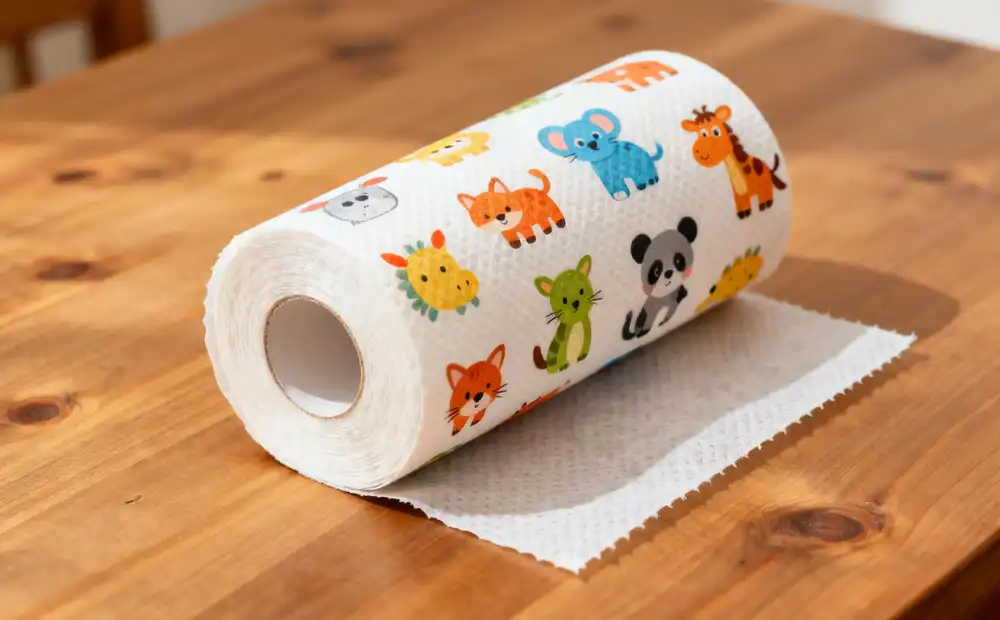
Why Nonwoven Fabric Is Difficult to Print
Most nonwoven materials are made from polypropylene (PP) spunbond or meltblown structures. These substrates present unique challenges:
1. Porous Surface Structure
Ink may penetrate unevenly, causing dull colors or feathering.
2. Low Surface Energy
PP nonwoven has poor natural ink adhesion without proper formulation.
3. Fiber Movement
Loose fiber structures can cause dot gain and image distortion.
4. Absorption Variability
Different GSM materials behave differently during ink transfer.
Because of these characteristics, standard solvent ink systems often cause environmental and odor issues, while low-quality water inks may lead to rubbing or color fading.
Why Choose Water-Based Flexographic Printing for Nonwoven?
Flexographic printing is the most efficient method for nonwoven roll-to-roll production.
When combined with high-performance water-based flexo ink, it offers:
1. Low VOC & Regulatory Compliance
Water-based ink contains minimal volatile organic compounds, helping manufacturers comply with global environmental regulations and reducing operator exposure risks.
This is especially important for:
-
Hygiene products
-
Baby diapers
-
Medical disposable items
-
Reusable shopping bags
2. Strong Adhesion on PP Nonwoven
Modern water-based flexo ink formulations include:
-
High-performance acrylic emulsions
-
Adhesion promoters for low surface energy substrates
-
Optimized particle size control
Result: Excellent rub resistance even on 40–80 GSM spunbond PP.
3. High-Speed Production Stability
In industrial flexographic lines running 150–250 m/min:
-
Stable viscosity control
-
Fast drying performance
-
Reduced foaming
-
Consistent color density
This ensures smooth mass production.
Technical Parameters for Optimized Nonwoven Flexo Printing
Below are recommended operating parameters for stable results:
| Parameter | Recommended Range |
|---|---|
| Ink Viscosity | 15–25 seconds (Ford Cup #4) |
| pH Value | 8.0 – 9.0 |
| Anilox Line | 120–200 LPI |
| Drying Temp | 50–80°C |
| Printing Speed | 120–250 m/min |
Note: Actual parameters depend on substrate GSM and press configuration.
Typical Applications of Flexo Printing on Nonwoven Fabric
Water-based flexographic printing is widely used for:
-
Nonwoven shopping bags
-
Mask fabric packaging
-
Hygiene product wrapping
-
Agricultural covers
-
Disposable medical sheets
-
Promotional fabric banners
The demand for eco-friendly printing continues to grow globally.
Water-Based Flexo Ink vs Solvent Ink for Nonwoven
| Comparison | Water-Based Flexo Ink | Solvent Ink |
|---|---|---|
| VOC Emission | Very Low | High |
| Odor | Minimal | Strong |
| Environmental Compliance | High | Limited |
| Operator Safety | Safer | Risky |
| Adhesion (Proper Formulation) | Excellent | Good |
| Sustainability | Eco-Friendly | Not Sustainable |
For brands targeting ESG compliance and export markets, water-based systems are increasingly preferred.
Common Problems & Solutions in Nonwoven Flexographic Printing
Problem 1: Ink Rubbing Off
Cause: Low binder strength or insufficient drying.
Solution: Use high-adhesion water-based flexo ink + optimize drying temperature.
Problem 2: Color Fading After Storage
Cause: Poor pigment dispersion or low lightfastness.
Solution: Use high-quality pigment dispersion system.
Problem 3: Blurred Printing
Cause: Excess ink transfer from anilox roller.
Solution: Adjust LPI and viscosity.
Why Professional Ink Formulation Matters
Not all water-based inks are suitable for nonwoven fabric.
A specialized formulation must balance:
-
Penetration control
-
Surface bonding
-
Film flexibility
-
Fast drying
-
Abrasion resistance
Selecting the right ink supplier significantly reduces production risk.
FAQ: Flexographic Printing on Nonwoven Fabric
Q1: Can flexographic printing achieve high image resolution on nonwoven fabric?
Yes. With optimized anilox selection and controlled ink viscosity, sharp and vibrant graphics are achievable.
Q2: Is corona treatment required for PP nonwoven?
In most cases, no additional treatment is required if using high-adhesion water-based flexo ink.
Q3: Is water-based ink suitable for baby diaper printing?
Yes. It is widely used due to low odor and compliance advantages.
Q4: What is the typical drying time?
At 60–80°C, surface drying occurs within seconds during high-speed printing.
Q5: Does water-based ink crack on folded shopping bags?
High-quality formulations maintain flexibility and resist cracking.