RU
RU EN
EN CN
CN


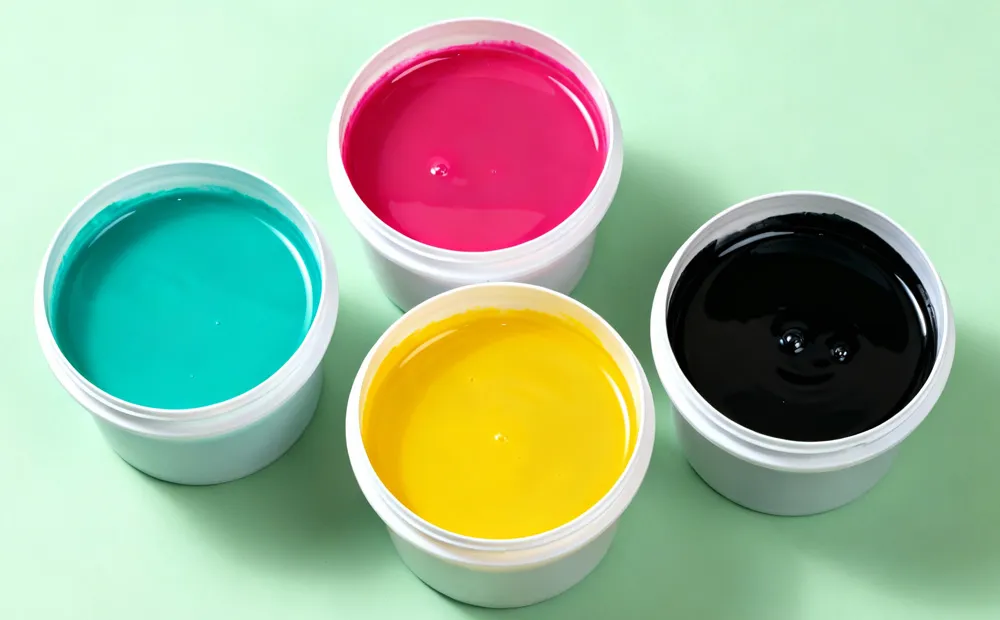
The selection of pigments for water-based inks also needs to take into account the coloring performance, dispersibility, stability, and environmental performance of pigments, while combining with substrate characteristics (such as paper, non-woven fabric, plastic film, etc.), and finally achieve the goal of "qualified color, stable performance, controllable cost, and compliant environmental protection".
I. Core Principle: Adaptability First
The core of pigment selection for water-based inks is "adaptability" — pigments must be highly compatible with the dispersion system, printing substrate, and application scenario of water-based inks, while finding a balance between performance and cost.First is the system adaptability principle. The dispersion medium of water-based inks is water, so pigments must have good hydrophilicity and alkali resistance, and can be stably dispersed in the water-based system without hydrolysis, precipitation, or discoloration.
Second is the scenario adaptability principle. Different application scenarios have significantly different requirements for ink performance, and pigment selection needs to be adjusted accordingly: for water-based inks used in food and medical packaging, pigments must be environmentally compliant, low in VOCs, and pass certifications such as FDA and REACH; for inks used in outdoor advertising and agricultural covering films, pigments must have excellent light resistance and yellowing resistance; for inks used in non-woven fabrics, pigments must have good adhesion and friction resistance to avoid fading after printing.
Finally, the principle of balancing cost and performance. There is a large price difference between pigments: organic pigments are bright in color but high in cost, while inorganic pigments are low in price but narrow in color spectrum. It is necessary to choose reasonably according to product positioning. Avoid blindly pursuing high performance leading to excessive costs, or simply reducing costs leading to substandard product quality.
II. Key Indicators: From Physicochemical Properties to Application Performance
The physicochemical properties of pigments directly determine their performance in water-based inks. When selecting, it is necessary to focus on the following six core indicators, and comprehensively evaluate the adaptability combined with practical production needs such as dispersion difficulty and storage stability.(1) Hydrophilicity and Dispersibility
The hydrophilicity of pigments is the premise for their stable dispersion. For surface-hydrophobic pigments, it is necessary to introduce hydrophilic groups through surface modification to improve their wettability in water.High-quality pigments should have uniform and fine particle size with a narrow particle size distribution, which can be uniformly dispersed in the water-based system and not easily agglomerated. In practical selection, the dispersibility can be evaluated by testing the average particle size and dispersion stability of the pigment.
(2) Alkali Resistance
The binders of water-based inks are mostly acrylic and polyurethane resins, and the pH value needs to be controlled between 8.0 and 9.5. Therefore, the selected pigments must have good alkali resistance, and will not dissolve, discolor, or chemically decompose in the weakly alkaline system, ensuring the stable hue and reliable system of the ink.(3) Coloring Performance
Coloring performance is the core function of pigments, mainly including three indicators: tinting strength, hue, and hiding power. Tinting strength refers to the intensity of color that pigments impart to inks. The stronger the tinting strength, the less pigment dosage is required, which can not only reduce costs but also reduce the impact of pigments on the stability of the ink system.The hue needs to be accurately matched with the target color. Different types of pigments have great differences in hue: organic pigments are bright in color and rich in color spectrum, such as phthalocyanine blue and phthalocyanine green with pure and high saturation hue, which are suitable for high-end printing with high color requirements; inorganic pigments have dull hue but strong hiding power for basic colors, which are suitable for mid-to-low-end printing with low color requirements and emphasis on cost.
(4) Stability
The stability of pigments includes storage stability, light resistance, and weather resistance, which directly affect the storage life of inks and the service life of printed products. In terms of storage stability, pigments should not settle, agglomerate, or discolor when stored in the water-based system for 12 months.Light resistance and weather resistance are mainly for outdoor application scenarios. Pigments must be able to resist the impact of ultraviolet radiation and environmental factors to avoid fading and yellowing of printed products.
(5) Environmental Compliance
With the tightening of global environmental regulations (such as EU REACH, US EPA, China GB 38507-2020), the environmental compliance of water-based inks has become the key to market access, and pigments are one of the core factors affecting the environmental friendliness of inks. When selecting pigments, it is necessary to strictly control the content of harmful substances such as heavy metals, prohibited aromatic amines, and VOCs, and prioritize the selection of environmentally friendly pigments.(6) Relative Density
The difference in relative density of pigments will affect the storage stability of water-based inks. When multiple pigments are used in combination, pigments with similar relative densities should be selected as much as possible. If pigments with different relative densities need to be used, additives such as dispersants and thickeners can be added to adjust the viscosity and stability of the ink system, reducing the risk of floating color and sedimentation.III. Case Study
Taking the selection of pigments for water-based inks used in flexographic printing of mask non-woven fabrics as an example, it needs to closely meet the core requirements of mask products for "environmental safety, delicate color, strong adhesion, temperature resistance, and slight friction resistance", while adapting to the process characteristics of flexographic printing such as low pressure, medium ink layer (4–10μm), and high-speed printing, combined with the substrate characteristics of mask non-woven fabrics.1. Clarify core requirements and substrate characteristics: As a material indirectly in contact with the skin, the pigments of water-based inks used for printing mask non-woven fabrics must strictly meet environmental compliance requirements, be free of heavy metals and prohibited aromatic amines, low in VOCs, and pass FDA safety certification; the commonly used PP non-woven fabrics for masks have low surface energy, so pigments must have good hydrophilicity and dispersibility to adapt to the substrate characteristics after corona treatment.

2. Preliminary screening of pigment varieties: Prioritize the selection of environmentally friendly self-dispersing organic pigments. These pigments have undergone hydrophilic modification and can be stably dispersed in the water-based system, while meeting the environmental safety requirements of masks. At the same time, request product specifications from pigment suppliers, focus on checking the particle size distribution, surface treatment method, heavy metal content, temperature resistance range, and environmental certification of pigments, exclude unqualified pigments, and initially determine 2–3 alternative pigments.
3. Lab test: According to the proportion of the water-based ink formula, prepare ink samples through sand mill grinding and dispersion. Print the samples on the special PP non-woven fabric substrate for masks through a flexographic color developer, simulating the flexographic printing process of quantitative ink supply and low-pressure transfer by anilox rollers. First, observe whether the printed pattern has granularity and burrs, test the particle size distribution of the ink to ensure no agglomeration. Second, adhesion test: after the printed sample is dried at low temperature, perform a peel test with transparent tape to ensure that the ink film does not fall off or fade; third, environmental and safety test: detect the content of heavy metals, aromatic amines, and VOCs in the ink sample to confirm compliance with relevant certification standards; fourth, stability test: store the ink sample at room temperature and 40℃ high temperature for 7 days, observe whether sedimentation, stratification, or discoloration occurs, and test the hue stability of the pigment under the low-temperature drying process of 50-60℃ to avoid discoloration and yellowing during the drying process.
4. Pilot test verification: After mass preparation of ink, observe the batch stability of the ink, check for problems such as abnormal viscosity, sedimentation, and hue deviation; conduct sampling inspection on the mask non-woven fabrics printed in the pilot test to confirm that the printed patterns are delicate and the color is uniform, and the adhesion and environmental protection meet the requirements. At the same time, calculate the pigment dosage and production cost to confirm that it meets the cost positioning of mask products.
5. Determine the final selected pigments. Solve the problems encountered in the test process to ensure that it meets the color requirements of mask products, and finally achieve the perfect adaptation of pigments to the flexographic printing process, mask non-woven fabric substrate, and product safety requirements.
Conclusion
The selection of pigments for water-based inks is a systematic project. Only through the whole-process control of "demand positioning — variety screening — lab test — pilot test verification" can the optimal pigments be selected. With the continuous upgrading of water-based ink technology, environmentally friendly, high-performance, and multi-functional pigments will become the development trend of the industry.At the same time, the selection of pigments is not static. It is necessary to timely adjust the pigment varieties and formulas according to the update of substrates, changes in application scenarios, and upgrading of environmental regulations, so as to ensure the stable quality of water-based ink products, meet market demand, and achieve the dual improvement of production efficiency and market competitiveness.