RU
RU EN
EN CN
CN

Facial mask nonwoven fabric is a direct skin-contact material that may also interact with cosmetic essence liquids. Printing on this substrate must meet strict visual, mechanical, and cosmetic safety requirements. Water-based flexographic ink is the preferred solution due to its low VOC content, absence of harmful solvent residues, and soft color performance. However, the porous and delicate structure of hydroentangled nonwoven fabric introduces unique technical challenges.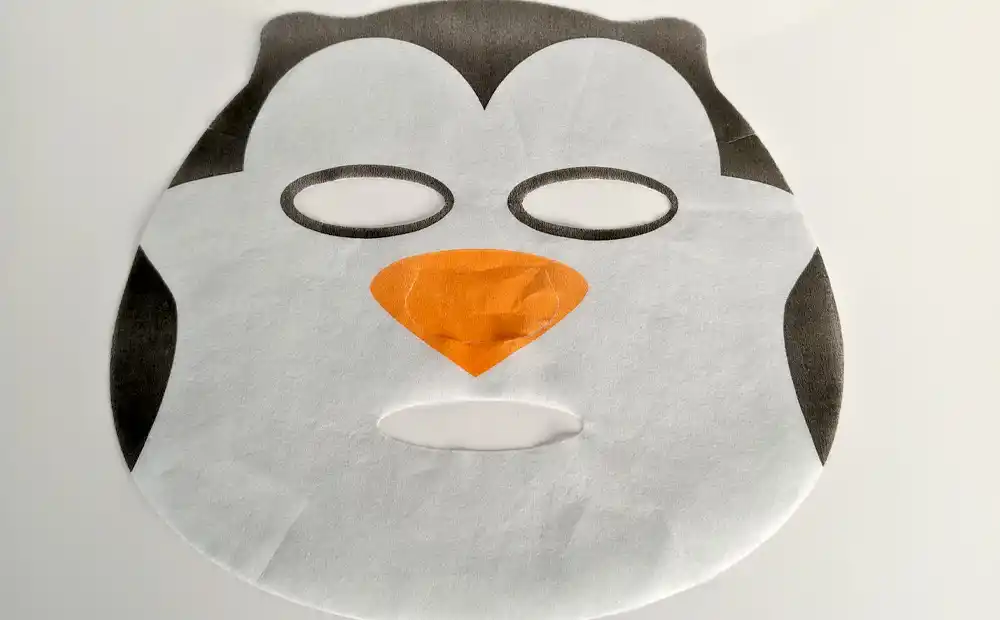
Material Characteristics & Compliance Requirements
- High porosity (40–60%) and loose fiber structure (1–3D fiber fineness)
- Limited tolerance for aggressive surface treatment
- Direct skin contact — must comply with EC 1223/2009 and GB 7916 cosmetic safety standards
- Heavy metals ≤0.05 mg/kg
- Migration limit ≤0.01 mg/kg
- VOC content typically below 5 g/L
The combination of high absorbency and strict migration control makes ink formulation and process control critical.
Key Technical Challenges & Optimized Solutions
1. Uneven Ink Absorption & Show-Through
Problem: Ink penetrates excessively into pores, causing blurred edges, uneven color density, and backside staining.
Solutions:
- Use higher solid-content ink (42–48%) with controlled viscosity (15–20s, Zahn cup #4 at 25°C)
- Apply nano-dispersed pigments (0.3–0.8 μm) for uniform coverage
- Select high line-count anilox rollers (180–200 LPI, 8–12 BCM)
- Control printing pressure at 0.08–0.12 MPa and speed at 60–80 m/min
- Optional low-temperature plasma treatment (≤40°C) to raise surface tension to 36–38 mN/m
2. Migration & Residue Risks
Problem: Ink components may migrate into essence liquid, leading to discoloration or compliance failure.
Solutions:
- Use cosmetic-grade, low-migration water-based flexo ink
- Adopt inorganic or migration-resistant pigments
- Staged drying process: 45–50°C initial drying, 55–60°C final curing
- Ensure final moisture content ≤1%
- Optional addition of 0.3–0.5% silane coupling agent to enhance fiber bonding
- Perform 24-hour immersion testing in simulated essence solution
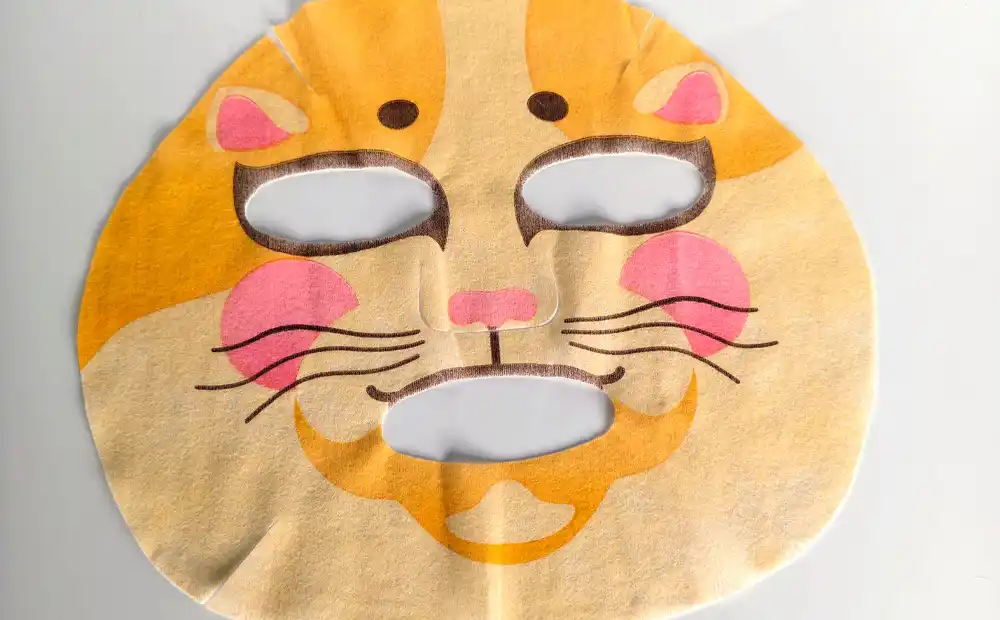
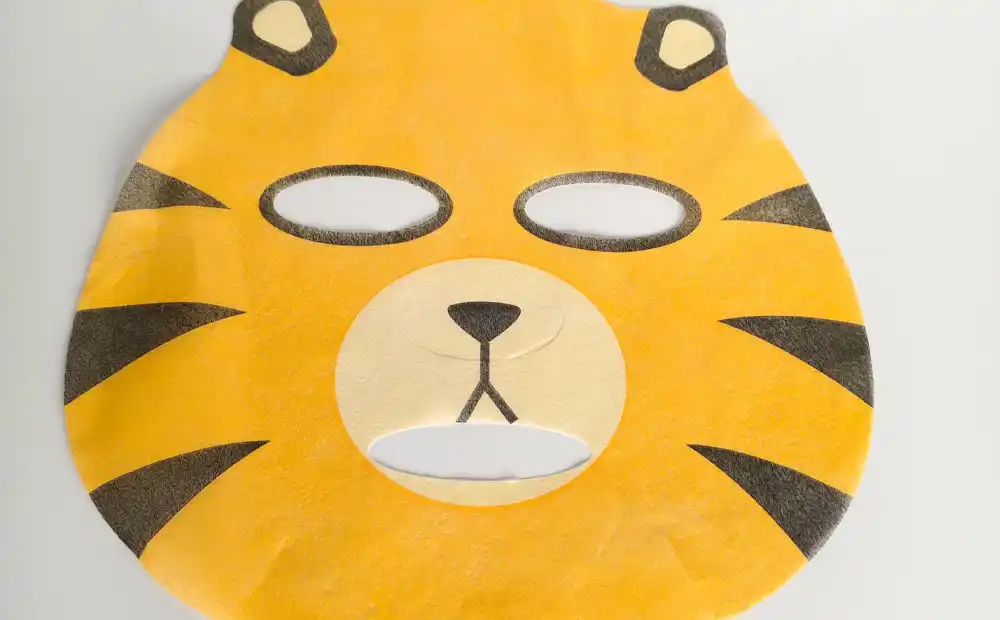
3. Poor Water Resistance After Soaking
Problem: Ink layer softens or bleeds when soaked in cosmetic serum.
Solutions:
- Use modified water-resistant acrylic resin systems
- Add 1.0–1.5% water-resistance additives
- Maintain ink film thickness at 3–5 μm
- Ensure full crosslinking through sufficient drying time
4. Linting & Fiber Damage During Printing
Problem: Friction between plate and substrate causes fiber shedding, leading to print defects.
Solutions:
- Select anti-lint hydroentangled nonwoven (≥Grade 4 lint resistance)
- Lower plate hardness (Shore 25–30°)
- Maintain moderate viscosity and add 0.3–0.5% lubricant
- Install pre-print brushing and vacuum fiber removal systems
Conclusion
Printing on facial mask nonwoven fabric requires balancing cosmetic safety compliance, substrate limitations, and flexographic process control. The key lies in optimized ink formulation, precise drying management, controlled transfer volume, and strict quality testing.
High-performance cosmetic-grade water-based flexographic ink enables brands to achieve stable color performance, low migration, and safe skin-contact compliance — supporting premium positioning in the global skincare market.
StarColor water-based flexographic ink is specially engineered for printing on facial mask nonwoven fabrics, addressing key challenges in safety, ink penetration, and durability.
Made with cosmetic-grade, high-purity raw materials, it complies with EU EC 1223/2009 and China GB 7916 standards. Heavy metals and migration levels are well below regulatory limits, and the ink is low-odor and non-irritating, ensuring safe skin contact.
Its high solid-content formula with nano-scale pigment dispersion reduces uneven absorption and ink strike-through on porous substrates. Modified resins and dedicated water-resistance additives improve resistance to essence liquid immersion, preventing fading and peeling.
Optimized viscosity and thixotropy minimize fiber linting during printing. The ink runs on existing flexo equipment without modification, enabling stable, compliant, and cost-effective production for mask nonwoven applications.