RU
RU EN
EN CN
CN


Introduction
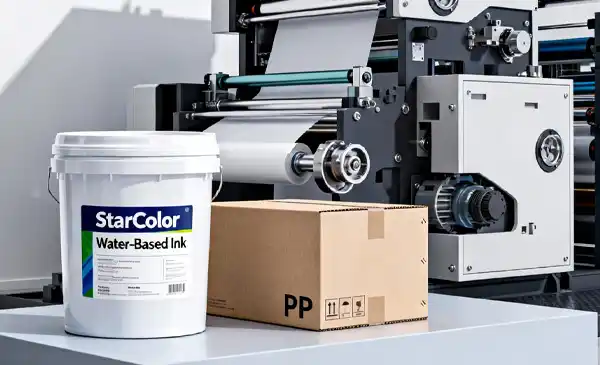
Water-based flexographic inks have become the preferred printing solution for PP corrugated boxes thanks to low VOC emissions, good color performance, and suitability for high-speed production. However, PP’s low surface energy, non-absorbent nature, and corrugated structure introduce specific technical challenges during printing.
This article summarizes common production issues and provides practical technical solutions based on printing experience and material behavior.
Key Compatibility Challenges
- Low surface energy: Untreated PP surface tension is only 28–30 mN/m, making ink wetting and adhesion difficult.
- Non-absorbent substrate: Ink drying relies entirely on water evaporation, reducing drying efficiency.
- Corrugated structure: Height differences between flute peaks and valleys cause uneven pressure and ink transfer.
- High performance demand: Printed boxes must withstand moisture, abrasion, stacking pressure, and outdoor exposure.
Common Problems and Technical Solutions
1. Poor Adhesion and Low Abrasion Resistance
Symptoms: Ink rub-off, cross-hatch adhesion ≤2B, peeling after folding or stacking.
- Apply corona or plasma treatment to achieve 38–42 mN/m surface tension
- Use water-based flexo inks with modified acrylic emulsions and silane adhesion promoters
- Drying tunnel ≥2 m with staged temperatures: 45–55°C (flash-off), 60–65°C (final drying)
- Ensure clean substrate surfaces and effective static elimination
2. Uneven Printing and Ink Coverage
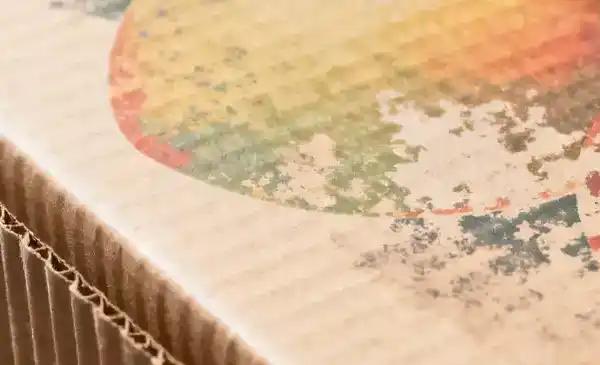
Symptoms: Mottling, exposed substrate, lighter color on flute peaks.
- Printing pressure: 0.12–0.18 MPa using elastic impression systems
- Ink viscosity: 20–28 s (Zahn #4, 25°C) with balanced thixotropy
- Anilox selection: 80–120 LPI, 20–30 BCM for sufficient ink transfer
- Use flat, well-laminated PP corrugated blanks
3. Color Inconsistency and Dot Gain
Symptoms: ΔE > 1.5, tonal loss, dot gain > 12%.
- Use nano-dispersed pigments (0.5–1.0 μm) with stable pH (8.5–9.5)
- Maintain stable printing speed: 80–120 m/min
- Ensure uniform drying conditions with temperature variation ≤5°C
- Store inks at 20–25°C and mix thoroughly before use
4. Surface Defects: Bubbles, Pinholes, Orange Peel
- Control ink mixing speed at 300–500 rpm and allow deaeration
- Add appropriate defoamers (0.1–0.2 wt%)
- Use low-temperature initial drying (40–45°C) to avoid skinning
- Improve leveling with compatible flow additives
5. Durability and Post-Processing Issues
Symptoms: Fading, cracking, ink loss during die-cutting, poor adhesive bonding.
- Use lightfast pigments and hydrolysis-resistant acrylic resins
- Add UV absorbers and antioxidants (1–2 wt%)
- Keep drying temperature ≤65°C to maintain ink film flexibility
- Ensure adhesive compatibility or reserve unprinted bonding areas
Conclusion
The primary challenges in printing PP corrugated boxes with water-based flexographic inks stem from non-absorbent substrates and uneven corrugated structures.
By combining proper surface treatment, substrate-specific ink formulations, optimized pressure control, and staged drying, printers can achieve stable print quality, strong adhesion, and long-term durability while meeting environmental compliance requirements.
Appendix: Key Process Parameters
| Category | Parameter | Recommended Range |
|---|---|---|
| PP Surface Treatment | Surface tension after treatment | 38–42 mN/m |
| Water-Based Ink | Surface tension / Viscosity / pH | 36–40 mN/m / 20–28 s / 8.5–9.5 |
| Printing | Pressure / Speed / Anilox | 0.12–0.18 MPa / 80–120 m/min / 80–120 LPI (20–30 BCM) |
| Drying | Temperature / Air speed | 45–65°C / 4–6 m/s |
| Environment | Temperature / Humidity | 20–25°C / 45–65% |