RU
RU EN
EN CN
CN


Many people believe that gravure inks cannot meet food contact requirements due to process characteristics. In fact, gravure printing inks can fully achieve food-grade qualification. However, affected by formula composition, raw material selection and third-party testing costs, their prices are much higher than ordinary gravure inks.
To comply with food contact standards across global regions, the mainstream solution nowadays is not the large-scale adoption of food-grade gravure inks. Instead, the gravure inside printing and lamination process is widely applied to keep ink away from direct food contact. This approach ensures regulatory compliance while effectively controlling production costs and maximizing cost performance.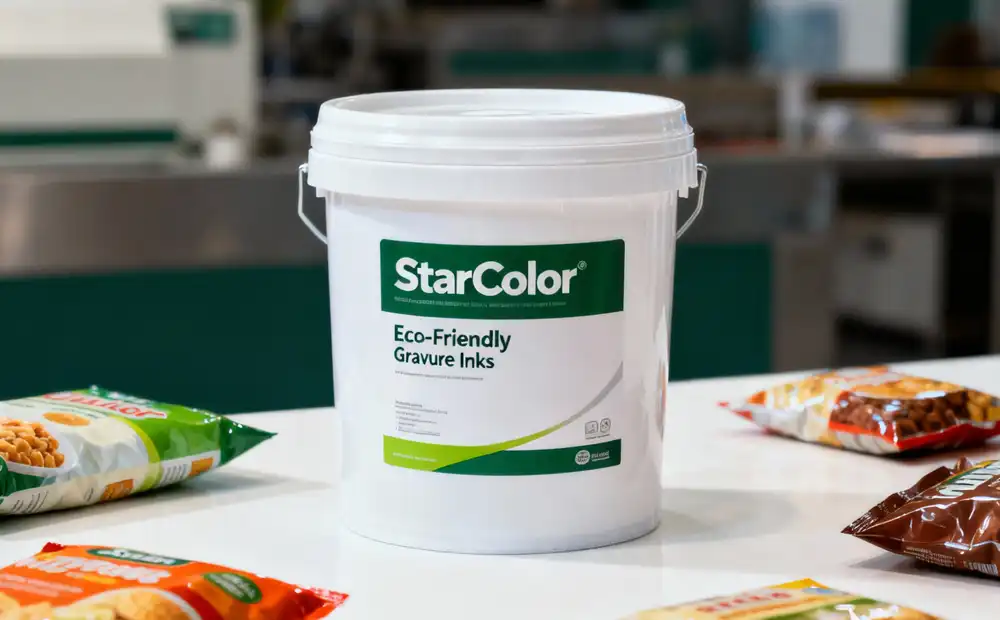
1. Cost Comparison
Global market price data shows a clear price gap between ordinary water-based gravure inks and food-grade water-based gravure inks:
- Ordinary water-based gravure ink: International average price ranges from USD 3.5–6 per kg. It is mainly used for non-food packaging, only meets basic printing performance, and has not passed food contact safety testing.
- Food-grade gravure ink: International average price ranges from USD 8.5–15 per kg. Prices in the EU and the United States are as high as USD 10–15 per kg.
In terms of price difference, food-grade gravure ink costs about 2.4 to 2.5 times that of ordinary water-based gravure ink, and some high-end grades even reach 3 times. This is the core reason why most manufacturers are reluctant to adopt food-grade gravure ink for direct food contact.
2. International Compliance Standards
To qualify as food grade, gravure ink must comply with food contact material regulations in major global regions. Although requirements vary slightly, the core control principles are consistent.
Main international standards and key requirements:
1. EU Standards: Centered on Framework Regulation (EC) 1935/2004, one of the strictest food contact compliance systems worldwide. It mandates Good Manufacturing Practice (GMP) and prohibits the use of CMR substances (carcinogenic, mutagenic, reprotoxic). The new EU Regulation 2023/1442 further clarifies ink migration limits and testing methods, raising the compliance threshold.
2. US Standards: Governed primarily by FDA 21 CFR 175.300, which regulates resins, polymer coatings and inks for food contact. All ingredients must be listed within FDA permitted inventories and pass extraction tests using water, n-heptane and 8% ethanol to ensure no harmful substance migration under simulated food contact conditions.
3. China Standards: GB 4806.14-2023 is the specific standard for printing inks in food contact materials, supported by GB 4806.1-2016 general requirements and GB 9685 additive specifications. Its control indicators are internationally aligned, covering heavy metals, prohibited substances, solvent residues and migration limits.
Regardless of regional standards, food-grade gravure inks are strictly controlled in the following key aspects: heavy metal limits, prohibited chemical substances, solvent residues, overall migration, specific migration, and NIAS (Non-Intentionally Added Substances) management. These indicators directly determine food-grade qualification.
3. Compliance Judgment
To judge whether gravure ink is food grade, comprehensive evaluation shall be conducted from standard adaptability, test reports and raw material qualification to meet regulatory requirements of target markets.
1. Verify standard adaptability: Confirm compliance with local food contact regulations. For the EU, comply with (EC) 1935/2004 and EU 2023/1442; for the US, comply with FDA 21 CFR 175.300; for China, comply with GB 4806.14-2023.
2. Check third-party test reports: Require official reports from authoritative laboratories such as SGS. The report must specify test items, methods and results, focusing on qualified indicators of heavy metals, prohibited substances and migration volume.
3. Confirm raw material compliance: Verify that resins, pigments and additives are all food-grade and conform to regional additive standards, without using non-food-grade or prohibited raw materials.
4. Application Status
The global application of food-grade gravure ink is limited, mainly used in high-end and special scenarios. As an indirect contact solution, the inside printing lamination process has become the mainstream choice for food packaging gravure printing, balancing compliance and cost control.
1. Application fields and mainstream types of food-grade gravure ink
It is mainly adopted in high-end and special food scenarios, including: infant food packaging, high-temperature retort food packaging, direct-contact snack food packaging, and pharmaceutical-food compatible packaging.
Main ink types are water-based and benzene-ketone free formulations:
- Water-based food-grade gravure ink features environmental friendliness, low VOC and easy control of solvent residues. It is the most widely used type globally, compatible with PET, PP, PE and other packaging films, with good low-temperature resistance and retort resistance, commonly used in PET plastic snack bags.
- Benzene-ketone free gravure ink leaves no harmful solvent residue, suitable for EU and US markets with strict solvent limit requirements.
2. Inside printing lamination process: the most cost-effective and mainstream solution
This is the dominant practice in the industry. The core principle of inside printing lamination: print gravure ink on the inner side of the substrate, then laminate the printed film with another food-grade film such as PE or PET through dry lamination or extrusion lamination. The ink layer is sandwiched between two films and never touches food directly.
Outstanding advantages:
- No need for expensive food-grade ink; ordinary environmentally compliant gravure ink is sufficient, greatly reducing procurement costs.
- The ink layer is fully wrapped by laminated films, avoiding ink rubbing off and solvent migration, and isolating external contamination to ensure food safety.
- Inherit the advantages of gravure printing: thick ink layer, strong hiding power, excellent retort and rub resistance, suitable for high-speed mass production for snacks, condiments, beverages and frozen food packaging.
At present, more than 80% of global food gravure packaging adopts the inside printing lamination process. Food-grade ink for direct contact is only used in a small number of high-end and special scenarios, forming a market pattern of mainstream indirect contact, minority direct contact.
5. Conclusion
In summary, gravure printing ink can fully reach food-grade standard. The key lies in formula design, raw material selection and compliance testing, rather than the gravure printing process itself.
The high cost of food-grade gravure ink restricts its wide application. The inside printing lamination process perfectly balances regulatory compliance and cost control. It avoids direct contact between ink and food, and does not require large investment in high-priced food-grade ink, achieving dual balance of safety compliance and economic cost.