RU
RU EN
EN CN
CN


In the global food packaging printing industry, there are two widely recognized professional terms: Food Contact Ink, which refers to all printing inks applied on substrates that come into direct or indirect contact with food; and Low Migration Ink, a high-end segmented product optimized via customized resins, pigments and auxiliary additives. It imposes strict limits on the migration of small molecular substances, photoinitiators and aromatic amines into food simulants, making it suitable for high-standard scenarios such as European and American supermarket products, export food labels and flexible packaging.
Food packaging ink comes into direct or indirect contact with beverages, grease and acidic food. Excessive migration of ink components will trigger product recalls, customs detention and brand compliance risks. At present, five mainstream global regulatory systems have taken shape: the US FDA framework, general EU food contact regulations, dedicated Swiss ink ordinance, EuPIA industrial specifications and China national standard GB 4806.14.
This article systematically unpacks the core requirements, control logics and limit discrepancies of each regulation, accompanied by compliance judgment procedures, multi-dimensional regulatory comparison, segmented application scenarios and frequently asked compliance questions, sorting out a complete compliance implementation roadmap for printing factories and packaging brands. Ink manufacturers such as StarColor take simultaneous compliance with the five sets of regulations as the basic standard for product R&D and formula customization, to meet the demands of mixed domestic and cross-border orders.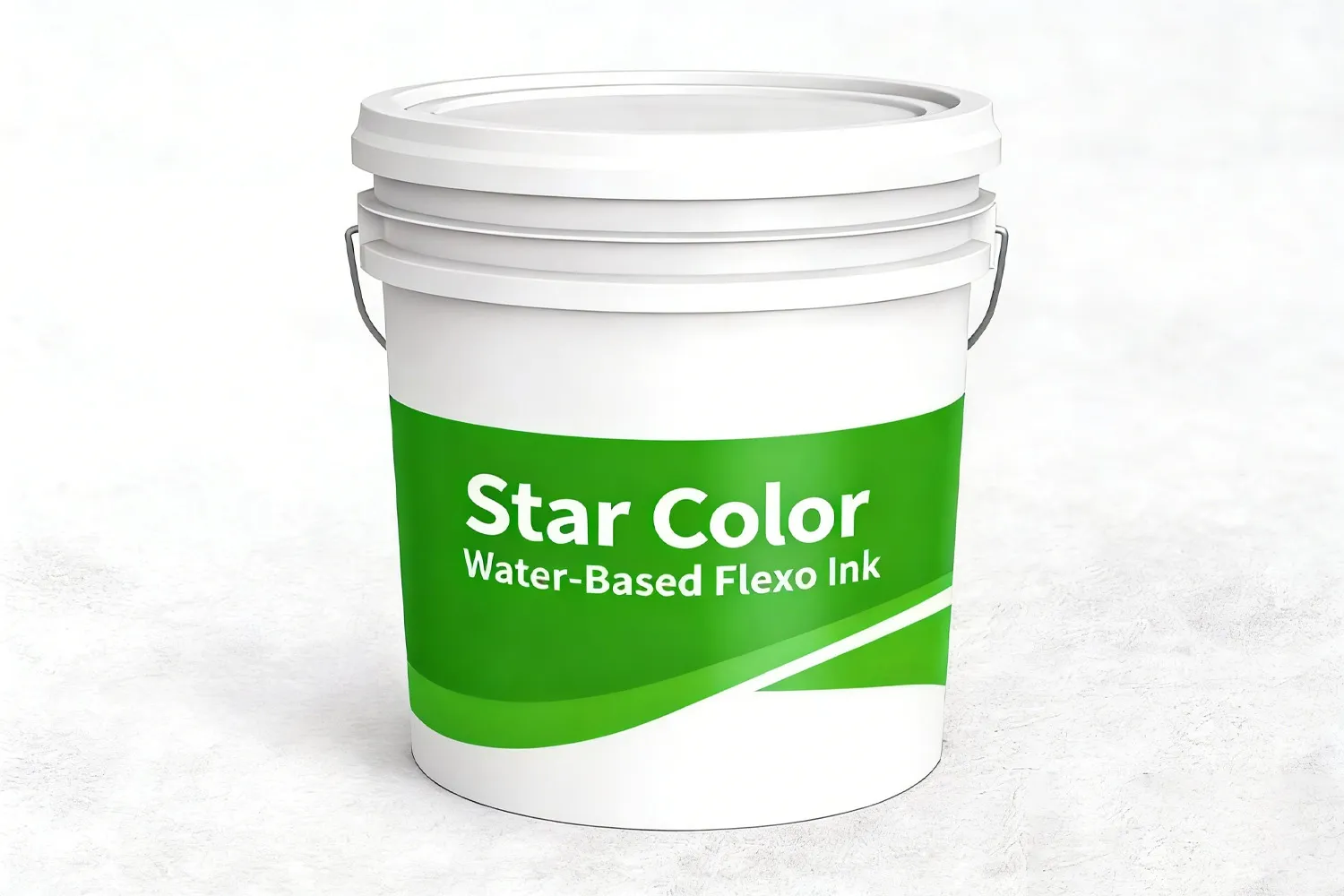
1. In-depth Analysis of Five Global Regulatory Systems for Food Contact Ink
1.1 US FDA Specifications for Food Contact Ink (21 CFR System)
The United States does not have an independent national standard dedicated to printing ink. Ink is classified as Food Contact Substance (FCS) and governed uniformly under 21 CFR Parts 170~178, applicable to food packaging, self-adhesive labels and laminated snack films exported to the US and Canada.
- Control logic: Threshold of Regulation (TOR) exemption rule; substances with dietary concentration below 0.5 ppb are exempted from full risk assessment. High-risk components require FCN (Food Contact Notification) registration or prior food contact approval;
- Test requirements: Migration tests are carried out with three types of food simulants including water, 10% ethanol and vegetable oil, covering ambient cold storage and hot filling working conditions;
- Applicable products: Food bottle labels, paper cups and laminated snack bags. Both UV flexo ink and water-based flexo ink must provide complete FDA Declaration of Conformity;
- Industrial practice: StarColor’s Low Migration Ink series for North American exports has passed full sets of FDA migration simulation tests. We can supply complete test reports and DoC documents to clients to simplify customs clearance review procedures.
1.2 General EU Food Contact Framework Regulation (EC 1935/2004 + EU 10/2011)
As the top-tier framework regulation enforced for all food contact materials (including printing ink) within the EU, it does not contain a dedicated positive list for ink, with the precautionary principle as its core: migrated ink components shall not endanger human health nor alter the flavor or composition of food.
- Basic migration limits: Overall Migration (OM) ≤ 10 mg/dm²; specific migration (SM) sets strict individual thresholds for bisphenol A, heavy metals and aromatic amines;
- Test conditions: Simulants are selected according to food categories, with two standard test cycles: 40°C for 10 days for ambient storage and 70°C for 2 hours for hot-filled goods;
- Supporting constraints: Full compliance with GMP (Good Manufacturing Practice) under EC 2023/2006, to control secondary migration risks caused by set-off ink offset during multi-color overprinting and roll stacking.
1.3 EuPIA Industry Guidelines for Food Contact Ink (GMP Specifications)
EuPIA is the authoritative European association for printing ink manufacturers. Its published Guidelines on Printing Inks for Food Contact Materials serves as the universal implementation standard for European printing plants and food brands, and also forms the industrial definition basis of Low Migration Ink.
- Core control rules: Distinguish Direct Food Contact (DFC) ink and Non-DFC ink, with differentiated requirements for raw material selection and migration testing;
- NIAS (Non-Intentionally Added Substances) control: Migration limit of by-products generated during production ≤ 10 ppb. UV ink adopts a restricted list of permitted photoinitiators, banning high-migration TPO-type initiators;
- Document obligations: Ink suppliers must provide downstream customers with TDS (Technical Data Sheet), full ingredient formula lists, migration test reports and Declaration of Conformity (DoC);
- Widely adopted scenarios: High-end European food labels and infant complementary food packaging all require ink to fully comply with EuPIA guidelines.
1.4 Swiss Ordinance RS 817.023.21 (World’s Strictest Positive List for Printing Ink)
Switzerland releases the only national-level regulation featuring an independent positive list exclusively for printing ink, with stricter control standards than the general EU framework. Most supermarket chains in Germany, France and Northern Europe list it as a mandatory market access threshold.
- Core feature: Appendix 10 provides a complete white list of permitted resins, pigments, additives and photoinitiators for ink; substances outside the list are prohibited for food packaging printing;
- Migration control: Separate individual migration limits are set for UV ink and water-based ink, with far tighter restrictions on primary aromatic amines and benzophenone photoinitiators compared to EuPIA;
- Applicable scope: Low Migration Ink used for organic food, infant food packaging exported to Switzerland and high-end EU supermarkets must pass all test items specified by this ordinance.
1.5 China National Standard GB 4806.14-2023 Inks for Food Contact Materials and Articles
This mandatory Chinese national standard was fully implemented on September 6, 2024, covering all Food Contact Ink used for domestic food packaging printing, as well as domestic products converted from export orders.
- Classified control: Clear classification of direct and indirect food contact ink; the overall migration limit for infant packaging is tightened to ≤ 6 mg/dm²;
- Positive list system: Appendix A lists all permitted raw materials for ink; unlisted substances are forbidden, matched with additive standard GB 9685;
- Mandatory test items: Overall migration, total heavy metals, primary aromatic amine migration, solvent residue, and ban on fluorescent whitening agents;
- Labeling requirements: Ink product labels must mark whether it is direct or indirect food contact ink, applicable substrates and restrictions on curing/drying processes.
2. Multi-Dimensional Comparison Table of the Five Regulatory Systems
| Comparison Item | US FDA 21 CFR | EU EC 1935/2004 + EuPIA | Swiss Ordinance RS 817.023.21 | China GB 4806.14-2023 |
|---|---|---|---|---|
| Control Mode | Threshold exemption + FCN registration | General framework + industrial GMP guidelines | Dedicated positive list for ink (strictest globally) | Raw material positive list + mandatory finished product testing |
| Overall Migration Limit | Case-by-case risk assessment | ≤ 10 mg/dm² | Separate individual substance limits | ≤ 10 mg/dm²; infant packaging ≤ 6 mg/dm² |
| UV Photoinitiator Control | High-migration types restricted, migration data required | Permitted list specified by EuPIA, NIAS ≤ 10 ppb | Strict positive list; most commercial initiators prohibited | Restricted directory of permitted photoinitiators |
| Judgment Standard for Low Migration Ink | No official definition, verified via migration simulation data | Full set of migration tests in accordance with EuPIA specifications | Full compliance with all single substance limits of Swiss Ordinance qualifies as low migration compliant | No official term "Low Migration Ink"; only divided into direct / indirect contact grades |
| Mandatory Compliance Documents | FDA migration test report, DoC Declaration of Conformity | EuPIA ingredient list, multi-simulant migration test report | Complete substance inventory, special test reports complying with Swiss Ordinance | CMA certified test report, compliant product labeling |
| Main Applicable Markets | USA, Canada, US-owned brands in Southeast Asia | Ordinary food packaging across 27 EU member states | Switzerland, Northern Europe, high-end EU supermarkets & organic food | All domestic food packaging within Chinese mainland |
3. Segmented Application Scenarios for Food Contact Ink & Low Migration Ink
Scenario 1: Domestic Food Packaging (Only GB 4806.14 Compliance Required)
Domestic snack packaging bags, paper shopping bags, standard beverage bottle labels, fresh produce stickers and outer printing of takeaway food boxes. Conventional water-based or UV food contact ink can be adopted, as long as it meets the national standard raw material list and basic migration testing requirements.
Scenario 2: North American Export Packaging (FDA Compliant Food Contact Ink)
Self-adhesive food labels, PET bottle labels and laminated snack films exported to the US and Canada must pass FDA multi-simulant migration testing. StarColor’s matched Low Migration UV flexo ink is compatible with high-speed narrow web label presses, with full sets of supporting documents available for customs inspection.
Scenario 3: General EU Food Packaging (EC 1935/2004 + EuPIA Specifications)
Affordable EU snacks, regular beverage outer packaging and carton printing. Indirect contact ink complying with EuPIA GMP guidelines and standard Low Migration Ink can meet compliance requirements.
Scenario 4: High-End European Supermarket / Organic / Infant Food (Low Migration Ink Complying with Swiss Ordinance)
Infant complementary food packaging, organic fresh produce labels, premium chocolate and dairy bottle labels must adopt Low Migration Ink fully compliant with Swiss Ordinance RS 817.023.21. The formula contains no high-risk substances outside the positive list, with migration values far below general regulatory limits.
Scenario 5: Cocktail Napkins & Inner Printing of Food-Grade Paper Cups (Direct Food Contact Ink)
Ink printed on the inner layer of napkins and paper cups falls under Direct Food Contact Ink with the strictest migration control standards. It must simultaneously deliver resistance to alcohol and grease, and satisfy dual regulatory standards matching target export markets.
4. Frequently Asked Compliance Questions (FAQ)
- Q1: Are Food Contact Ink and Low Migration Ink the same product?
A: They form a hierarchical inclusive relationship instead of being identical. Food Contact Ink is an umbrella term covering all inks suitable for food packaging printing. Low Migration Ink is a high-end subdivided category with modified formulas to drastically reduce migratable small molecules, specially developed to meet strict export standards of the EU, Switzerland and North America. China’s GB 4806.14 does not have an official definition for the term "Low Migration Ink".
- Q2: Do I have to comply with Swiss Ordinance if only exporting ordinary EU food products?
A: It is not a legally mandatory EU-wide regulation. However, supermarket chains and organic food brands in Germany, France and Northern Europe set Swiss Ordinance as a rigid procurement threshold. If clients put forward no special extra requirements, compliance with EuPIA industrial guidelines alone is sufficient for customs clearance.
- Q3: Does UV ink have a higher risk of excessive migration than water-based ink?
A: Conventional UV ink using generic photoinitiators carries higher migration risks. In contrast, StarColor’s Low Migration UV flexo ink adopts compliant low-migration photoinitiators. When full curing process parameters are properly controlled, its migration indicators outperform ordinary water-based ink.
- Q4: Is Food Contact Ink still required for printing on the outer non-food-contact side of packaging?
A: Yes. Roll stacking during production will cause set-off offset migration; consumers may also touch printed surfaces and indirectly transfer contaminants to food. Both GB 4806.14 and EuPIA mandate that ink used on outer packaging surfaces be categorized as Food Contact Ink under regulatory control.
- Q5: Can a single ink formula comply with FDA, EuPIA, Swiss Ordinance and GB 4806.14 all at once?
A: Yes. StarColor’s full range of Low Migration Food Contact Ink adopts a universal globally compliant formula, with all raw materials listed on the positive lists of the above regulations. We can simultaneously provide test reports and declarations of conformity corresponding to the five regulatory systems, supporting mixed domestic and cross-border orders and cutting inventory costs for printing plants that stock multiple ink grades.
- Q6: Is a migration test report the only compliance document needed for ink?
A: No. A complete compliance document package includes third-party migration test reports, manufacturer’s DoC Declaration of Conformity, full ingredient formula lists, TDS Technical Data Sheets and raw material safety certificates. European and American customs as well as brand auditors will review the full set of materials; missing documents will result in non-compliance judgment.
Conclusion
Regulatory requirements for Food Contact Ink and Low Migration Ink in the food packaging printing industry keep tightening year by year. GB 4806.14 forms the minimum compliance baseline for domestic sales; exports to North America follow the FDA framework; EU markets are split into general EuPIA standards and stricter Swiss Ordinance specifications for high-end products. Ink formulas applicable to different markets cannot be interchanged arbitrarily.
Compliance management is divided into three core layers: upstream positive list control of raw materials, midstream low-migration modification of ink formulas, and downstream curing/drying parameter control during printing processes. Selecting an ink supplier with integrated R&D capacity covering multi-system global compliance can simplify the whole compliance workflow for printing factories and avoid losses such as product returns and mass scrapping caused by non-compliant ink.
Equipped with an independent laboratory, StarColor has developed full lines of water-based and UV Low Migration Ink formulas tailored to the five global regulatory frameworks. We can customize compliant ink solutions according to clients’ target export markets, printing substrates and press processes, providing one-stop resolution to regulatory access challenges for global food packaging printing.