RU
RU EN
EN CN
CN


Color difference of water-based ink printed paper bags
Date: Aug 12 2024 From: Star Color Views:
Color difference is one of the most common and costly quality issues in water-based ink paper bag printing. It directly affects brand consistency, customer acceptance, and production efficiency.
Unlike theory-based discussions, this guide focuses on real production scenarios, providing measurable standards, root cause analysis, and actionable solutions to achieve stable color consistency.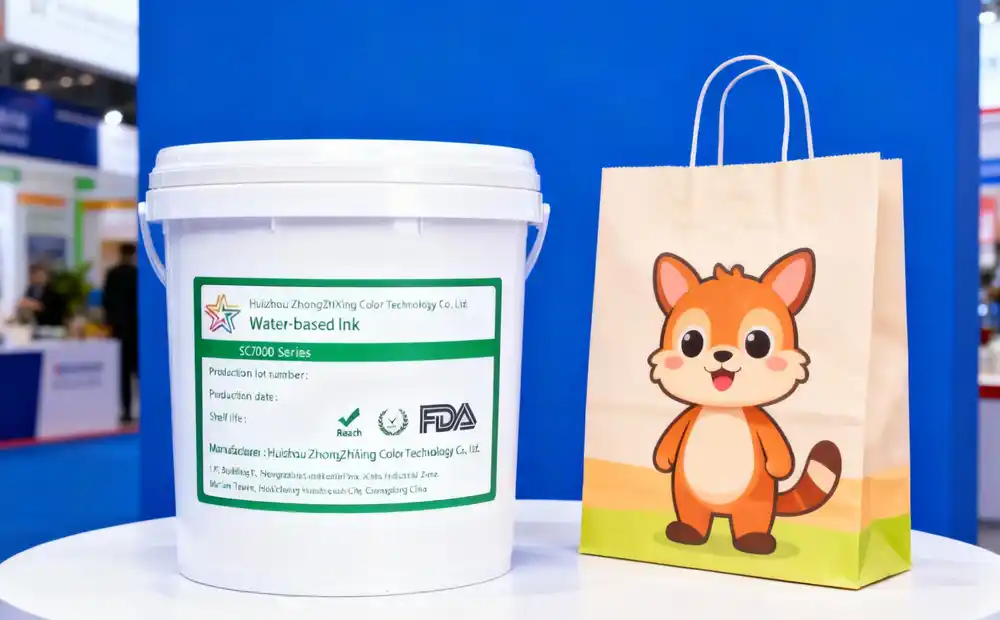
1. What Is Acceptable Color Difference? (ΔE Standard)
Color difference is typically evaluated using the CIELAB ΔE value:
- ΔE ≤ 1.0 → Almost invisible (high-end packaging)
- ΔE 1.0–2.0 → Slight difference (acceptable for most brands)
- ΔE 2.0–3.5 → Visible difference (needs control)
- ΔE ≥ 3.5 → Unacceptable (high rejection risk)
Industry recommendation: Keep ΔE ≤ 2.0 for paper bag printing.
2. Root Causes of Color Difference (Production-Level Analysis)
2.1 Ink System Instability
- Inconsistent pigment dispersion → uneven color strength
- Viscosity fluctuation → unstable ink transfer
- Different ink batches → color deviation
2.2 Paper Substrate Variation
- Different absorbency levels
- Surface roughness variation
- Whiteness difference affecting color perception
2.3 Printing Process Fluctuation
- Anilox roller wear or incorrect BCM
- Printing pressure inconsistency
- Speed changes affecting ink transfer
2.4 Drying Conditions
- Over-drying → color shift (lighter tone)
- Under-drying → ink penetration, darker tone
2.5 Environmental Factors
- Temperature: affects viscosity
- Humidity: affects drying speed and color density
3. Practical Solutions to Control Color Difference
3.1 Standardize Ink Preparation (MOST CRITICAL)
- Use same batch ink for each order
- Control viscosity within ±5% tolerance
- Use automatic ink circulation system
3.2 Establish Digital Color Control
- Use spectrophotometer to measure ΔE
- Create standard color database
- Replace visual judgment with data control
3.3 Optimize Anilox Roller Selection
- Use stable BCM (avoid worn rollers)
- Match LPI with design coverage
- Regular ultrasonic cleaning
3.4 Control Paper Quality at Source
- Use paper from same supplier and batch
- Control whiteness variation (ΔW ≤ 2)
- Test absorbency before production
3.5 Stabilize Printing Parameters
- Keep speed variation within ±5%
- Maintain constant printing pressure
- Avoid frequent machine stops
3.6 Optimize Drying System
- Recommended temperature: 40–50°C
- Ensure uniform airflow (no direct blowing)
- Avoid surface skinning effect
4. Advanced Techniques for High-End Color Consistency
4.1 Closed-Loop Color Control
Use inline color measurement systems to automatically adjust ink density during printing.
4.2 Use High-Stability Water-Based Ink Systems
- High pigment dispersion consistency
- Stable rheology under different temperatures
- Low batch-to-batch variation
4.3 Pre-Production Color Proofing
- Run trial prints before mass production
- Approve color standard with customer
- Lock parameters for full production
5. Common Mistakes That Cause Color Instability
- Mixing inks from different suppliers
- Adjusting color based on visual judgment only
- Ignoring substrate variation
- Frequent viscosity changes during production
- Lack of standardized SOP
Conclusion
Color difference in water-based ink paper bag printing is not caused by a single factor—it is the result of ink formulation, substrate variability, and process control.
By implementing standardized color management, digital measurement (ΔE control), stable ink systems, and optimized printing conditions, printers can achieve:
- Consistent color output
- Reduced rejection rate
- Improved production efficiency
- Higher customer satisfaction
In competitive packaging markets, stable color is not just quality—it is brand credibility.