RU
RU EN
EN CN
CN


Discussion on technical bottleneck and breakthrough direction of water-based ink in carton heat-curi
Date: Jan 15 2024 From: Star Color Views:
Thermal curing is a critical step after printing with water-based inks in corrugated carton production. It directly affects ink adhesion, drying efficiency, and final packaging quality. As packaging printing moves toward higher speed and environmental compliance, several technical bottlenecks have emerged in the curing process.
This article summarizes the main technical challenges in thermal curing of water-based inks and outlines practical solutions for improving printing efficiency and product quality.
Current Role of Water-Based Inks in Carton Printing
Water-based inks are widely used in corrugated carton printing because they contain minimal organic solvents and produce very low VOC emissions. This makes them safer for operators and suitable for packaging used in food, consumer goods, and logistics.
Thermal curing accelerates moisture evaporation and promotes resin film formation, allowing the ink layer to firmly bond with the carton substrate. Compared with natural air drying, thermal curing significantly reduces drying time and supports high-speed industrial printing.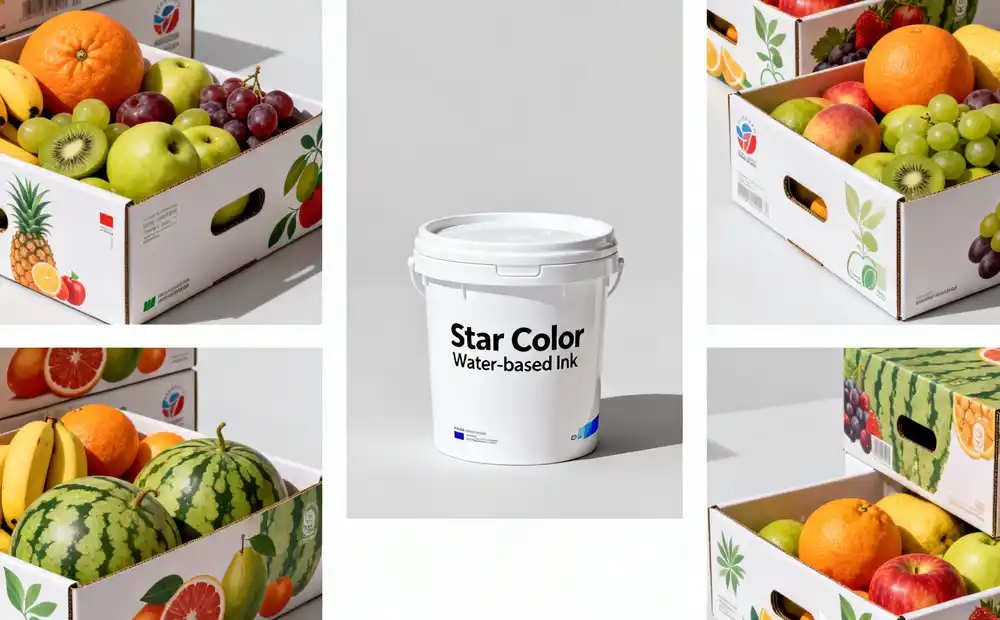
Main Technical Challenges
1. Low Drying Efficiency
Incomplete drying is one of the most common problems in carton printing. Even when the surface appears dry, residual moisture inside the ink layer may cause blocking, smudging, or carton deformation during stacking.
Main causes include:
- Water requires more heat to evaporate than solvent-based systems.
- Corrugated paper has high porosity and absorbs moisture.
- Low solid-content inks increase water content and drying time.
- Older drying equipment may provide insufficient heat or airflow.
2. Weak Ink Adhesion
Poor adhesion can cause color fading, ink peeling, or damage during die-cutting and transportation.
Common causes:
- Resin systems incompatible with carton substrates
- Surface contamination such as dust or oil
- Improper curing temperature or curing time
- Poor pigment dispersion reducing film strength
3. Foam Formation During Printing
Water-based inks contain surfactants and emulsions that may generate foam during high-speed printing. Trapped bubbles can create pinholes or white spots in the printed layer.
Improper defoamers or excessive dilution can further increase foam generation and printing defects.
4. Process Stability Issues
Variations in curing temperature, airflow, substrate moisture, or ink viscosity may cause inconsistent drying and color quality between batches.
5. High Energy Consumption
Water-based inks generally require more heat to dry than solvent-based inks. In some cases, energy consumption may be over 30% higher, increasing production costs for carton manufacturers.
Key Breakthrough Directions
1. Optimizing Ink Formulations
- Increase solid content to approximately 45–55% to reduce water evaporation load.
- Use modified acrylic or polyurethane resins for stronger adhesion.
- Add compatible defoaming agents to reduce foam formation.
- Introduce film-forming additives to improve curing stability.
2. Upgrading Drying Equipment
Modern curing systems should adopt a combined drying structure including hot air circulation and infrared assistance.
Typical recommended parameters:
- Initial drying temperature: 50–60°C
- Final curing temperature: 65–75°C
- Hot air speed: 4–6 m/s
Advanced systems with intelligent temperature control can significantly improve drying efficiency while reducing energy consumption.
3. Standardizing Process Control
- Adjust curing parameters based on substrate type and ink formulation.
- Monitor oven temperature and airflow every 30 minutes.
- Optimize printing sequence to improve drying efficiency.
- Maintain ink pH levels around 8.5–9.5 to stabilize printing performance.
4. Improving Substrate Preparation
Substrate quality plays a major role in curing performance. Carton materials should maintain moisture levels around 8–12%.
Surface treatments such as corona or plasma treatment can increase surface tension and improve ink adhesion.
5. Optimizing Cost and Energy Efficiency
- Use high-performance inks with higher solid content to reduce drying energy.
- Adopt energy-efficient heating systems and smart temperature control.
- Reduce material waste through lean production management.
- Explore emerging curing technologies such as infrared or microwave drying.
Industry Outlook
As environmental regulations tighten and packaging quality standards rise, water-based ink technology will continue evolving toward higher solid content, faster drying performance, and lower energy consumption.
Future carton printing systems will increasingly combine advanced ink formulations, intelligent drying equipment, and standardized process control to achieve higher efficiency and more stable production quality.
Collaboration between ink manufacturers and printing companies will play an important role in developing specialized water-based inks tailored to the needs of modern corrugated packaging production.