RU
RU EN
EN CN
CN


Tightening global environmental regulations, upgrading high-end packaging and accelerated low-carbon transformation are driving UV inks to become the most promising green technical solution in the plastic printing industry. From Europe, America to Asia-Pacific regions, from food flexible packaging to automotive and electronic industries, UV inks are systematically replacing traditional solvent-based inks by virtue of four core advantages: near-zero VOC emission, instant curing, strong adhesion and low migration safety. At present, the global market presents a pattern that Europe and America lead standards, Asia-Pacific drives market growth, LED-UV is widely popularized, and low-migration formulas become rigid requirements. The next decade will witness a golden period of global penetration and technological upgrading.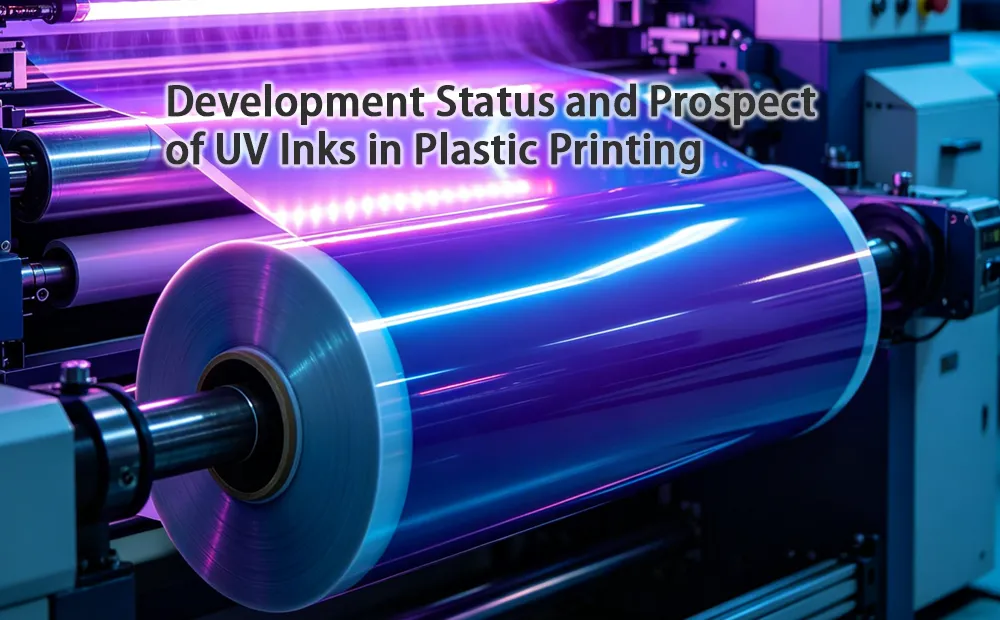
I. Global Market Status
1. Market Scale and Growth Rate
According to comprehensive data from Smithers Pira, GEP Research and other international institutions:
- The global UV ink market size will reach approximately 3.26–3.5 billion US dollars in 2025
- It is expected to hit 4.72–5 billion US dollars by 2030
- The compound annual growth rate from 2025 to 2030 stands at around 7.5%–8.0%
Among all segments, plastic printing ranks the fastest-growing track:
- The global penetration rate of UV ink in plastic printing reaches about 21% in 2025
- The annual growth rate is as high as 14.3%, far exceeding that of paper and other substrates
| Indicator | 2025 Estimate | 2030 Forecast | CAGR (2025-2030) |
|---|---|---|---|
| Global UV Ink Total Market Size | USD 3.26–3.5 Billion | USD 4.72–5.0 Billion | 7.5%–8.0% |
| Plastic Printing UV Ink Penetration Rate | 21% | Expected to exceed 40% | - |
| Annual Growth Rate of Plastic Printing UV Ink Segment | 14.3% | Maintain above 12% | - |
2. Regional Market Pattern in 2025
Europe: Standard pioneer, high-end oriented, mature LED-UV application
- Account for 30%–35% of the global market share
- EU REACH, (EC) 1935/2004 and new regulation 2023/1442 set the strictest global standards. Low migration, free of aromatic amines and NIAS have become basic market access requirements
- The popularization rate of LED-UV in flexible packaging exceeds 70% in Germany, Italy and France
- Core applications cover food direct-contact packaging, pharmaceutical packaging and cosmetic hoses
North America: Strict regulations, high value-added demand, industrial supply chain reshoring
- Occupy 25%–28% of the global market
- FDA 21 CFR 175.300 strictly controls substance migration and solvent residues
- Strong market demand for automotive interior parts, 3C product shells and high-end labels
- Nearshore outsourcing boosts local production capacity and promotes trade growth of high-end special printing inks
Asia-Pacific: Global manufacturing hub, major growth engine, cost-sensitive market
- Take up 38%–42% of the global market, ranking the world’s largest consumption region
- China, India and Southeast Asia are core growth markets
- Large consumption in medium and low-grade flexible packaging, express bags and ordinary labels
- LED-UV technology is being rapidly promoted, while customers are highly price-sensitive with low food-grade certification coverage
Latin America & Central and Eastern Europe: Late start, rapid growth, loose compliance cost
- Market penetration rate is lower than 15%, yet annual growth rate exceeds 10%
- Mainly applied in general packaging and non-food labels
- Local regulations are gradually aligned with EU standards with weak enforcement
| Region | Global Market Share | Core Market Characteristics | LED-UV Popularization Rate |
|---|---|---|---|
| Europe | 30%–35% | Strictest global food contact standards, high-end market dominated, low-migration formula as basic requirement | >70% (flexible packaging segment) |
| North America | 25%–28% | Strict FDA migration control, strong demand for high-value industrial printing, supply chain reshoring trend | >65% (new equipment) |
| Asia-Pacific | 38%–42% | World's largest consumption region, core growth engine, cost-sensitive market, low food-grade certification coverage | 45%–50% (rapidly increasing) |
| Latin America & Central and Eastern Europe | <5% | Late start, rapid growth, loose regulatory enforcement, mainly non-food general packaging applications | <15% |
II. Mainstream Global Technical Routes: LED-UV Dominates, Low-migration Formula Becomes Standard
1. Curing Technology: LED-UV gradually replaces traditional mercury lamp
- The global popularization rate of LED-UV reaches 58% in 2025 and will exceed 90% by 2030
- Energy consumption is reduced by over 60%, featuring ozone-free and cold light source, perfectly suitable for heat-sensitive thin PE and PET films
- All newly manufactured flexographic printing machines in Europe and North America are fully equipped with LED-UV systems
2. Three mainstream ink systems
Radical UV Ink (Largest global consumption)
- Moderate cost, fast curing speed and stable adhesion performance
- Widely used in non-food plastic products, labels and industrial decoration printing
Cationic UV Ink (Preferred for high-end food-grade scenarios)
- Low substance migration, free of small molecule residues, benzene and ketone solvents
- Total migration volume is less than 10 mg/dm², complying with EU 10/2011 and GB 4806.14-2023
- First choice for food flexible packaging in Europe and North America, 30%–50% higher in price than radical UV ink
Water-based UV Ink (Mainstream environmental protection trend)
- Extremely low VOC emission, mild odor and easy equipment cleaning
- Account for 28% of global UV ink market in 2025, mainly applied in high-end flexible packaging and children’s products
3. Substrate Adaptation Breakthrough for Non-polar Plastics
- 5B-level adhesion can be achieved on low surface energy substrates such as PP and PE via nano corona treatment, plasma treatment and primer coating
- International leading manufacturers including Sun Chemical and Siegwerk have launched special UV inks for untreated PP and PE materials, cutting down working procedure cost by 20%
III. Global Application Layout
1. Food and Flexible Packaging (account for over 50% market share)
- High-end direct contact scenarios: infant food packaging, high-temperature retort pouches and snack bags adopt low-migration cationic UV ink
- Inside printing and lamination (global mainstream solution): printing ink is sandwiched between two layers of films without direct food contact, ordinary eco-friendly UV ink is acceptable to balance cost and compliance
- More than 80% of global food flexible packaging adopts the combined solution of inside printing lamination and UV ink
2. Non-food Plastic Packaging
- Cosmetic hoses, daily chemical bottles, express bags and composite films use radical or water-based UV ink
- Market demand grows fastest in Southeast Asia and Latin America
3. Industrial and Functional High-value Printing
- Automotive interior parts: instrument panels, door panels and control buttons adopt wear-resistant, oil-resistant and weather-resistant UV ink with VOC ≤5 g/L
- 3C electronic products: mobile phone shells, TV frames and touch panels require high-hardness, fingerprint-resistant and chemical-resistant UV printing ink
- Medical packaging: medicine blister packs and sterilization bags need antibacterial, low-migration UV ink adaptable to ethylene oxide sterilization
IV. Future Development Trends (2026–2035 Global Forecast)
1. Policy-driven: Global low-carbon and safety standards keep tightening
- EU PPWR, CBAM carbon tariff and revised REACH regulations will further restrict the application of solvent-based printing inks
- North America, Japan, South Korea and Australia are tightening regulations on food contact materials and VOC emissions simultaneously
- The market share of solvent-based ink in plastic printing will drop from 70% to 40% by 2030, making UV ink the primary compliant alternative
2. Four major technological development directions
- Popularization of low-migration cationic ink: occupy over 70% of food-grade UV ink market by 2030
- Full industrial chain penetration of LED-UV: equipment cost will decrease by 40% and match all mainstream printing processes
- Industrialization of bio-based UV ink: bio-based content reaches more than 30% to cut carbon footprint by 50%
- Multi-functional composite ink: integrate antibacterial, anti-counterfeiting, conductive and weather-resistant functions to expand high-value market space
3. Core market growth drivers
- High-end packaging upgrading: the global food-grade UV ink market will reach 3 billion US dollars by 2030 with an annual compound growth rate of 18%
- Coordinated development with degradable plastics: the cost of PLA and PBAT will be equivalent to BOPP with mature matching UV printing technology
- Emerging industrial demands: new energy vehicles, flexible electronics and medical packaging maintain an annual growth rate above 25%
V. Conclusion
From a global perspective, UV ink has stepped into a critical transition period from alternative material to mainstream material in plastic printing industry. Europe and America dominate the high-end market relying on standard advantages and core technologies, while the Asia-Pacific region boosts overall market growth relying on complete manufacturing industry chains. LED-UV technology and low-migration ink formulas have become unified development directions worldwide. The global UV ink market will keep expanding steadily and is expected to exceed 5 billion US dollars by 2030, becoming the core driving force for green upgrading of the global plastic printing industry.
FAQ
1. What are the core advantages of UV ink compared with traditional solvent-based ink in global plastic printing?
There are four major advantages: first, zero VOC emission; second, instant curing to greatly improve production efficiency; third, outstanding adhesion performance suitable for various plastic substrates including PE, PP and PET, reaching 5B level in cross-hatch test; fourth, low migration property ensures high safety for food, medical and other high-standard application scenarios without harmful substance precipitation risk.
2. What are the main differences in UV ink markets among different regions?
The differences are mainly reflected in industry standards, application fields and cost acceptance. Europe focuses on high-end fields with LED-UV high penetration rate concentrated on food and pharmaceutical packaging; North America implements strict access regulations; Asia-Pacific is the largest consumer market dominated by mid and low-end products with high price sensitivity; Latin America and Central and Eastern Europe start late with loose regulatory execution.
3. What international standards must food-grade UV ink comply with? Is the market access threshold high?
Core international standards include EU (EC) 1935/2004, new regulation 2023/1442, EU 10/2011 and US FDA 21 CFR 175.300. The overall access threshold is relatively high. Besides, increasingly strict supervision on NIAS (Non-Intentionally Added Substances) in Europe and North America further raises the industry entry barrier.
4. What are the key development trends of global UV ink in plastic printing in the next decade?
Four core trends will be mainstream: firstly, environmental upgrading with low-migration, bio-based and zero-VOC ink becoming industry standards; secondly, comprehensive technological replacement of mercury lamp by LED-UV curing system; thirdly, multi-functional integration of anti-bacteria, anti-counterfeiting and other special properties; fourthly, global unification of industry standards with European regulations gradually influencing worldwide industrial specifications.