RU
RU EN
EN CN
CN


Nowadays, green printing has become the consensus for the transformation and upgrading of the global printing industry. Low pollution, low energy consumption, high safety and recyclability have unified standards for ink selection worldwide.
Compared with traditional solvent-based inks, LED-UV curing inks fully meet environmental policies across the globe including Chinese GB standards, as well as regulations in the European Union, the United States, Japan, South Korea and other mainstream markets in terms of waste gas emission, energy consumption control, hazardous substance management and recycling performance, making them core materials for global green printing transformation.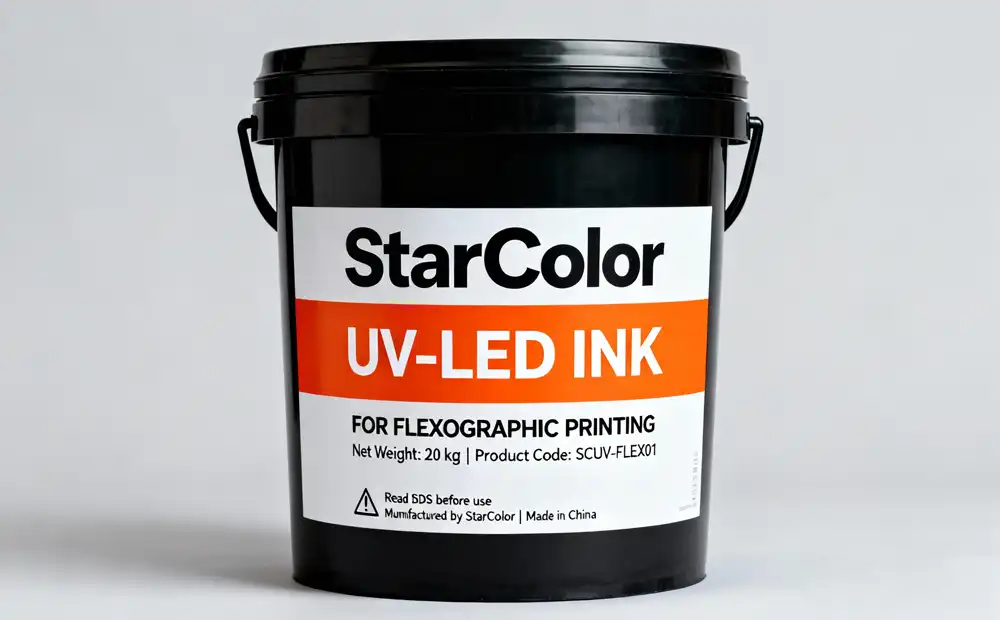
1. Zero VOC Emission
The control of volatile organic compounds (VOCs) is a key focus of air pollution governance. Strict restrictions on VOC emissions have been clearly stipulated in EU Directive 2004/42/EC, Japan’s Air Pollution Control Act and South Korea’s Air Environment Protection Act.
Adopting 100% solid content and solvent-free formula, UV ink produces no volatile organic solvents during blending, printing and curing processes, realizing zero VOC emission from the source and fully complying with VOC control requirements in major regions around the world.
2. Low-temperature Fast Curing to Achieve Global Carbon Reduction Goals
As a high-energy-consumption industry, energy saving and carbon reduction are essential for printing industry upgrading. Traditional solvent-based and water-based inks rely on hot air drying at 60-80°C. In contrast, UV ink forms solid ink film instantly through ultraviolet polymerization. The mainstream LED-UV curing works at a low temperature range of 25°C to 50°C without high-temperature heating, and achieves complete curing within 1 to 3 seconds, perfectly matching high-speed assembly line production worldwide.
Compared with traditional hot air drying, UV ink cuts printing energy consumption by more than 60%. According to the 2023 InterTech Energy Efficiency White Paper and Arkema 2024 LCA Report, European printing enterprises using LED-UV ink reduce carbon emissions per product by 40% to 50%. Based on reports released by U.S. Department of Energy and FTA in 2023, the promotion of UV curing technology contributes 35% of the annual energy-saving targets of the U.S. printing industry.
3. Strict Control over Hazardous Substances to Meet Global Safety Standards
Although hazardous substance control standards vary slightly in different regions, they share the same core requirement: prevent migration of harmful chemicals to protect human health and ecological environment. Formulated with eco-friendly raw materials, UV ink complies with mainstream global regulations:
- Heavy metal restriction: Contents of lead, mercury, cadmium, hexavalent chromium and other heavy metals satisfy EU RoHS 2.0, U.S. CPSIA and Chinese GB 28481 to avoid environmental and health risks caused by heavy metal migration.
- Harmful additive prohibition: Free of benzene, ketone, aromatic hydrocarbons, halogens and phthalates, without carcinogenic, teratogenic and mutagenic components, in line with EU REACH SVHC regulations.
- Food contact safety: Food-grade UV ink passes global food contact material certifications including Chinese GB 4806, EU 10/2011, U.S. FDA 21 CFR §175.300 and Japanese JIS Z 1707. Featuring low migration and no precipitation, it is widely used in food packaging, pharmaceutical packaging and infant product packaging.
- No environmental hormones: Free of formaldehyde, polycyclic aromatic hydrocarbons and other environmental hormones, finished printed products release no harmful substances into soil, water and atmosphere during use and disposal.
4. Reduction of Printing Solid Waste
The EU Waste Framework Directive requires the solid waste recovery rate of printing industry to reach over 85%. The U.S. EPA classifies waste printing ink and organic solvents as hazardous waste. Japan’s Basic Act on Establishing a Recycling-based Society enforces solid waste reduction in printing factories.
With excellent chemical stability, UV ink effectively solves solid waste problems caused by traditional inks:
Firstly, it enjoys long service life with extremely low idle loss, greatly cutting waste ink output. Secondly, high tinting strength and thin ink layer reduce ink consumption by 30%-40% compared with traditional solvent-based ink under the same printing area. Thirdly, it produces little ink residue, achieving remarkable solid waste reduction effects, lowering hazardous waste disposal costs and meeting global waste reduction requirements.
5. Low Wastewater Discharge
UV ink features water-free application mode. No large amount of clean water is needed for ink blending, and little water is consumed for daily equipment cleaning, generating almost no production wastewater. Different from traditional printing which requires complete sewage treatment systems, UV ink simplifies environmental management procedures and reduces sewage treatment costs, effectively preventing water and soil pollution and supporting global water resource protection.
6. Eco-friendly Cured Ink Film for Easy Recycling
The printed product recovery rate has exceeded 70% in the EU, the United States, Japan and other regions. Ink detachability and environmental friendliness are key factors affecting recycling efficiency. Ink layers of traditional solvent-based ink and partial water-based ink are hard to remove and easily penetrate into substrates, hindering waste material regeneration.
Cured UV ink film features stable chemical properties without precipitation of free harmful monomers and will not contaminate paper and plastic substrates. Waste printed paper can be normally pulped and deinked to produce recycled paper, complying with EU Packaging and Packaging Waste Directive. Waste plastic printing materials can be smoothly granulated and reused for recycled packaging production, matching plastic recycling systems in the United States and Japan.
Conclusion
The environmental advantages of UV ink cover the whole industrial chain including waste gas reduction, energy saving and carbon cutting, safety guarantee, solid waste control, sewage management and resource recycling. It not only conforms to China’s dual-carbon goals and domestic green printing policies, but also satisfies environmental laws and regulations across Europe, America, Japan, South Korea and other regions.
With increasingly strict global environmental policies, low-energy, zero-VOC, high-safety and recyclable UV eco-friendly ink has become the preferred material for green upgrading in packaging printing, label printing, book printing and plastic printing fields worldwide. It helps the global printing industry get rid of high-pollution and high-energy-consumption production modes and step into a low-carbon, clean and sustainable development era.
FAQ
1. Can UV ink adapt to different VOC control standards worldwide?
Yes. Eco-friendly standard UV ink adopts 100% solvent-free formula to achieve zero VOC emission, which is far higher than emission limits in all major regions. No formula adjustment is needed to meet local environmental supervision requirements.
2. What core global standards should export food packaging UV ink comply with?
It must meet EU 10/2011, U.S. FDA 21 CFR §175.300, Japanese JIS Z 1707 and Chinese GB 4806. Enterprises need to provide third-party test reports issued by institutions such as SGS to pass market access audits.
3. Why is LED-UV ink more environmentally friendly than traditional mercury lamp UV ink?
LED-UV ink contains no mercury pollutants in line with global mercury pollution control conventions, generates less heat and cuts energy consumption by over 30%. It produces no ozone to avoid atmospheric damage, with longer service life and lower accessory loss, becoming the mainstream trend of global UV printing.
4. Will the use of UV ink affect printing quality and production efficiency?
High-quality eco-friendly UV ink with optimized resin and pigment system reaches top global industrial standards in color saturation, substrate adhesion and printing definition. With curing speed of 1-3 seconds, it adapts to printing speed of 80-500m/min, improving production efficiency while realizing environmental protection and excellent printing performance.
5. What is the core value of UV ink for waste printed product recycling in circular economy?
Its cured ink film is free of harmful precipitation and easy to deink without interfering with paper and plastic substrate regeneration. It fits mature global waste printing recycling systems, improves recycling efficiency and recycled material quality, and promotes the construction of closed-loop green industrial chain in printing industry.