RU
RU EN
EN CN
CN


The use of UV ink in the printing of picture albums, magazines and other books
Date: Dec 08 2023 From: Star Color Views:
In high-end brochure and magazine printing, achieving a balance between visual quality, tactile appeal, and production efficiency is a long-standing industry goal. With advances in printing technology, UV ink has become the preferred alternative to conventional solvent-based inks, thanks to its instant curing, rich color performance, and low VOC emissions.
From simulating metallic finishes on covers to reproducing fine halftones on inner pages, UV ink enables both visual enhancement and process efficiency, making it a core material for premium publications.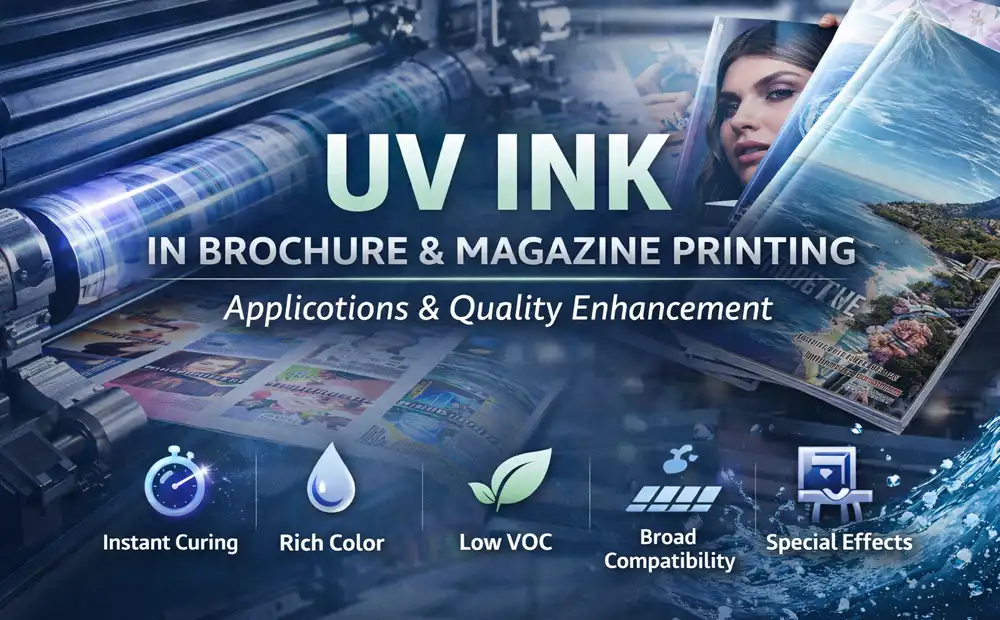
Key Advantages of UV Ink
1. Instant Curing and High Productivity
UV ink cures immediately under ultraviolet light, eliminating drying time caused by solvent evaporation. Compared with traditional inks that may require several hours before post-processing, UV ink cures within fractions of a second, enabling continuous workflows such as printing, finishing, and binding. This significantly improves productivity, particularly for time-sensitive magazine production.
2. Rich and Durable Color Performance
With higher pigment concentration and a dense cured ink film, UV ink delivers superior color saturation and opacity. It also provides excellent resistance to light and moisture, ensuring long-term color stability for art books and premium magazines. Gloss and matte effects can be flexibly combined to enhance visual depth.
3. Broad Substrate Compatibility
UV ink adheres well to a wide range of substrates, including coated paper, matte paper, specialty paper, and low-absorption materials. This expands design possibilities, especially for covers and creative inner pages that use textured or decorative papers.
4. Low VOC and Environmental Compliance
Unlike solvent-based inks, UV ink contains minimal volatile organic compounds. It complies with major environmental regulations such as EU REACH and China’s VOC emission standards, while also improving workplace safety and supporting sustainable printing practices.
5. Integration with Special Finishing Effects
UV ink is highly compatible with special processes such as spot varnishing, raised lettering, matte effects, and decorative coatings. Many of these effects can be achieved inline, reducing secondary processes and improving registration accuracy.
Printing Processes Using UV Ink
UV Offset Printing
UV offset is widely used for fine image reproduction in magazine pages and brochure interiors. It supports high-resolution halftone printing and delivers consistent color reproduction for photographs and illustrations.
UV Flexographic Printing
UV flexo printing is suitable for high-speed, large-volume magazine production. Its stable ink transfer and fast curing make it ideal for publications with strict delivery schedules.
UV Screen Printing
UV screen printing is mainly used for special visual and tactile effects, such as spot gloss, raised textures, and decorative finishes on covers. Thicker ink layers create strong visual contrast and premium touch.
Key Technical Control Points
- Ink selection: Choose ink types based on image detail, abrasion resistance, and special effects requirements.
- UV curing control: Match curing energy to ink thickness to ensure full polymerization without overheating.
- Substrate preparation: Surface treatment may be required to improve adhesion on low-absorption papers.
- Environmental stability: Maintain stable temperature and humidity to ensure consistent print quality.
Conclusion
UV ink has become a cornerstone material for high-end brochure and magazine printing. By combining instant curing, vibrant color, low environmental impact, and strong adaptability, it addresses both quality and efficiency challenges in modern publishing.
As UV ink formulations and curing technologies continue to evolve, their role in premium printed publications will expand further, driving the industry toward more precise, creative, and sustainable production.