Whether you are printing on challenging low-surface-energy films like PE and PP, or high-quality paper stocks for wine labels, the wrong ink choice leads to adhesion failures, slow curing, and costly downtime.
At Star Color Ink, we understand that "one size fits all" doesn’t exist in narrow web flexography. This technical guide breaks down the critical factors for selecting the optimal ink system, compares UV LED vs. Water-Based technologies, and provides a troubleshooting framework for common press issues.
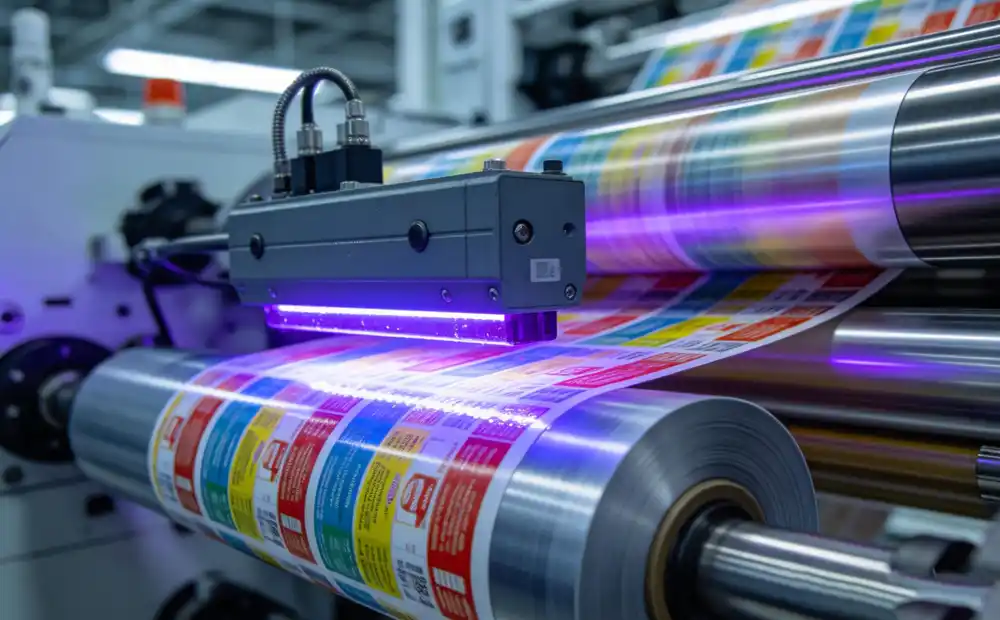
The Unique Challenges of Narrow Web Flexography
Narrow web printing (typically webs up to 20 inches/500mm wide) presents a unique set of demands that differ significantly from wide-web packaging printing:- High Press Speeds: Modern narrow web presses demand inks with instant cure times (for UV) or rapid evaporation (for water-based) to prevent smearing at high linear speeds.
- Diverse Substrates: A single job might run on everything from uncoated kraft paper to metallized PET or shrink sleeves. The ink must adapt to varying surface tensions.
- Complex Post-Processing: Labels often undergo hot foil stamping, embossing, die-cutting, and laminating immediately after printing. The ink film must be flexible enough not to crack yet hard enough to resist scratching.
- Regulatory Compliance: With the rise of clean-label trends, inks for food, beverage, and pharmaceutical labels must meet rigorous Low Migration standards (e.g., EuPIA, Swiss Ordinance, FDA).
Top Contenders: UV LED vs. Water-Based Inks
So, what is the best flexo ink for narrow web labels? The answer depends on your substrate and end-use application. Here is a deep dive into the two dominant technologies in 2026.1. UV LED Flexo Ink: The High-Performance Standard
UV LED technology has become the industry standard for high-speed narrow web printing, particularly for filmic substrates.- How it Works: Uses specific wavelengths of light (usually 385nm or 395nm) to instantly polymerize the ink.
- Best For: PE, PP, PET, BOPP, metallized films, and synthetic papers.
- Key Advantages:
- Instant Curing: No drying tunnels needed, saving energy and floor space.
- Superior Adhesion: Excellent bonding on non-porous surfaces without the need for primers or corona treatment.
- Durability: Exceptional resistance to scratching, chemicals (alcohol, oils), and abrasion.
- Color Gamut: Delivers high gloss and vibrant colors essential for premium branding.
- Star Color Insight: Our StarColor SC-UV Series is formulated with a "wide curing window," ensuring full cure even at high press speeds or with aging LED lamps, reducing the risk of tacky prints.
2. Water-Based Flexo Ink: The Sustainable Choice
While UV dominates films, water-based inks remain the champion for porous substrates and eco-conscious brands.- How it Works: Dries through evaporation and absorption into the substrate, often assisted by hot air dryers.
- Best For: Uncoated/coated papers, cardboard, corrugated labels, and compostable films.
- Key Advantages:
- Eco-Friendly: Zero VOCs (Volatile Organic Compounds), non-toxic, and safe for operators.
- Cost-Effective: Generally lower cost per liter compared to UV inks.
- Sustainability: Ideal for "clean label" initiatives and fully recyclable/compostable packaging structures.
- The Challenge: Achieving strong adhesion on films often requires surface treatment (corona) or specialized resin formulations.
- Star Color Innovation: Our new AquaFlex Bio-Series utilizes advanced bio-based resins that offer improved water resistance and film adhesion, bridging the gap between sustainability and performance.
Comparison Table: Which Ink Wins?
| Feature | UV LED Flexo Ink | Water-Based Flexo Ink |
|---|---|---|
| Curing Mechanism | Instant (LED Light) | Evaporation/Absorption (Heat) |
| Best Substrate | Films (PE, PP, PET), Foils | Paper, Cardboard, Porous Stocks |
| Print Speed | Very High (200+ m/min) | Moderate to High |
| Adhesion on Film | ⭐⭐⭐⭐⭐ (Excellent) | ⭐⭐⭐ (Requires Treatment) |
| Scratch Resistance | Extremely High | Moderate |
| VOC Emissions | None | None/Negligible |
| Food Safety | Low Migration Options Available | Naturally Safe (No Photoinitiators) |
| Energy Consumption | Low (LED efficiency) | Medium (Heaters required) |
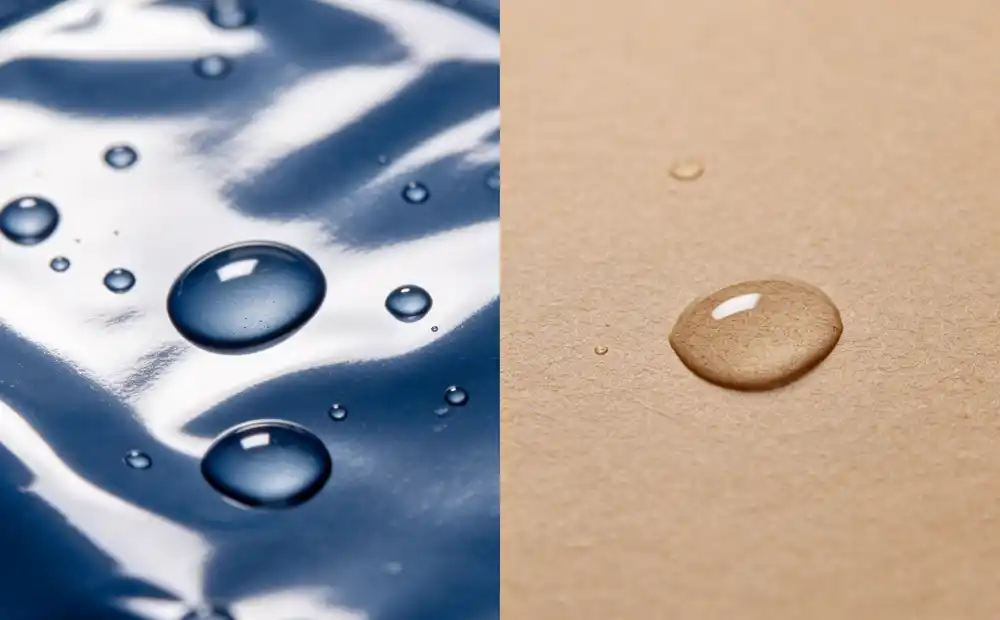
Critical Selection Criteria: How to Test for "The Best"
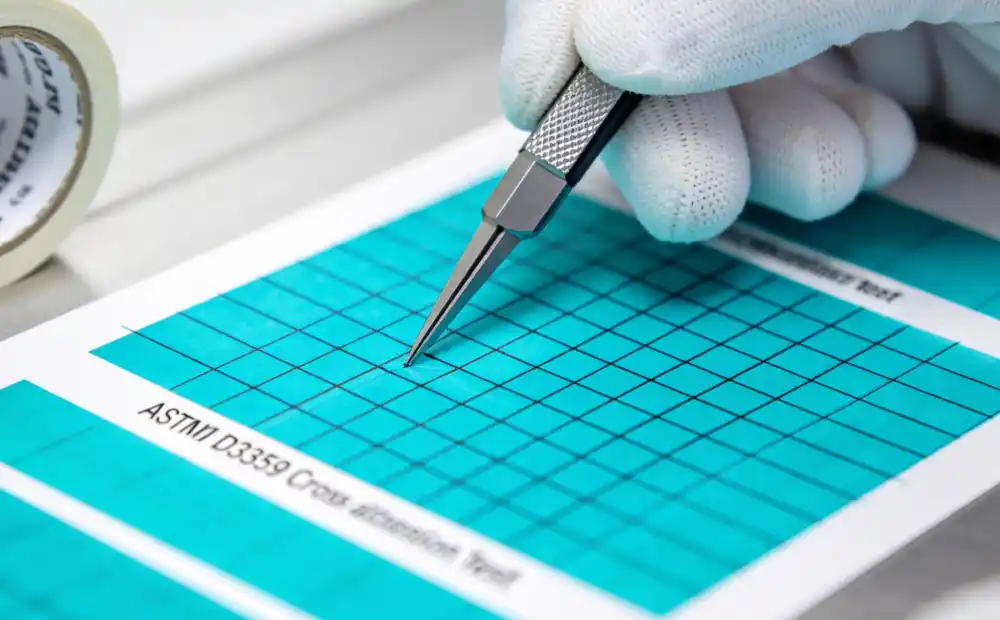
Don't just take our word for it. When evaluating the best flexo ink for narrow web labels, your technical team should perform these standard tests:1. Adhesion Testing (ASTM D3359)
Perform a cross-cut tape test. Apply the ink, cure it, grid cut the surface, apply tape, and rip it off.- Pass Criteria: 5B rating (0% removal). Any lifting indicates poor formulation for that substrate.
2. Chemical Resistance
Rub the printed sample with a cloth soaked in Isopropyl Alcohol (IPA) or simulate contact with cooking oil/detergents.- Why it matters: Beer bottles sit in ice buckets; cleaning products splash on labels. The ink must not smear or fade.
3. Low Migration Verification
For food and pharma labels, request a Migration Certificate from your supplier. Ensure the ink complies with:- EuPIA GMP (Good Manufacturing Practice)
- China GB 4806.10-2025
- FDA 21 CFR regulations
4. Flexibility & Crack Resistance
After curing, bend the substrate 180 degrees or run it through a doming process.- Fail Sign: Micro-cracks in the ink layer, which ruin the visual appeal and barrier properties.
Troubleshooting Common Narrow Web Ink Issues
Even the best ink can fail if parameters aren't optimized. Here are quick fixes for common problems:- Problem: Ink Misting (Flying Ink)
- Cause: Viscosity too low or excessive static electricity.
- Fix: Increase viscosity slightly; install static eliminators; ensure proper anilox roll selection.
- Problem: Under-Curing (Tacky Surface)
- Cause: Insufficient UV power or ink layer too thick.
- Fix: Check LED lamp output (mW/cm²); reduce anilox volume; switch to a high-reactivity ink like StarColor SC-UV.
- Problem: Poor Wetting on Film
- Cause: Substrate surface tension is lower than ink surface tension.
- Fix: Increase corona treatment level (aim for >38 dynes/cm); add a wetting agent; switch to a low-surface-tension ink formula.
Why Star Color Ink is Your Partner in Narrow Web Printing
At Star Color Ink, we don’t just sell ink; we provide printability solutions. Our Narrow Web Division specializes in formulating inks that push the limits of speed and substrate compatibility.Our Promise:
- Consistency: Batch-to-batch color stability ensures your brand looks the same today as it did five years ago.
- Technical Support: Direct access to our color scientists for on-press troubleshooting.
- Certified Safety: Full documentation for food-grade and low-migration compliance.
- Customization: Need a specific Pantone match or a specialized additive? We offer custom blending services.
Case Study: A leading beverage label converter switched to StarColor SC-UV Black for their PE shrink sleeve line. Result? A 20% increase in press speed due to faster curing, and a 15% reduction in waste from adhesion failures.
Conclusion: Make the Right Choice for Your Press
There is no single "best" ink, but there is definitely a best ink for your specific application.- Choosing UV LED for films and high-durability labels? Look for wide curing windows and low migration.
- Choosing Water-Based for paper and sustainability? Prioritize resin technology and drying efficiency.
Get Your Free Narrow Web Sample Kit Today
Experience the difference of Star Color Ink on your own press. Our sample kit includes:- UV LED Cyan, Magenta, Yellow, Black, and White (High Opacity).
- Water-Based Process Set for Paper.
- Full Technical Data Sheets (TDS) and Safety Data Sheets (SDS).
Or contact our technical team at [mailto:eva@starcolor-ink.com] for a custom consultation.