Buying UV inks directly affects your production compliance, product stability, and long-term profitability. A flexible packaging factory once used unverified UV inks and ended up recalling over 1.2 million food-packaging bags—causing a direct economic loss of more than $1.1 million.
In a market where the industry concentration is below 45% and small manufacturers are mixed in quality, buyers must not only identify reliable suppliers but also avoid the high-risk ones.
This guide highlights the **5 major warning signs** you must watch for—complete with verification steps so you can build a solid risk-prevention system.
Warning Sign 1: Vague or Suspicious Certifications
UV inks—especially those for food-contact packaging—are strictly regulated under FDA and EU REACH. Compliance documents are the “life-or-death line” for cooperation.
Typical Red Flags- Reports are photocopies without signatures or lab stamps.
- Claims of FDA compliance but only offers “generic reports” unrelated to your ink model.
- Certificates cannot be found online or expired more than one year ago.
Products may fail customs inspection or cause food-safety incidents due to migration of harmful substances.
How to Verify- Request original 3rd-party reports issued within the last 12 months.
- For food-contact applications, ask specifically for Specific Migration Tests.
- Verify certificate numbers on the testing agency’s official website.
Warning Sign 2: Weak Technical Capabilities
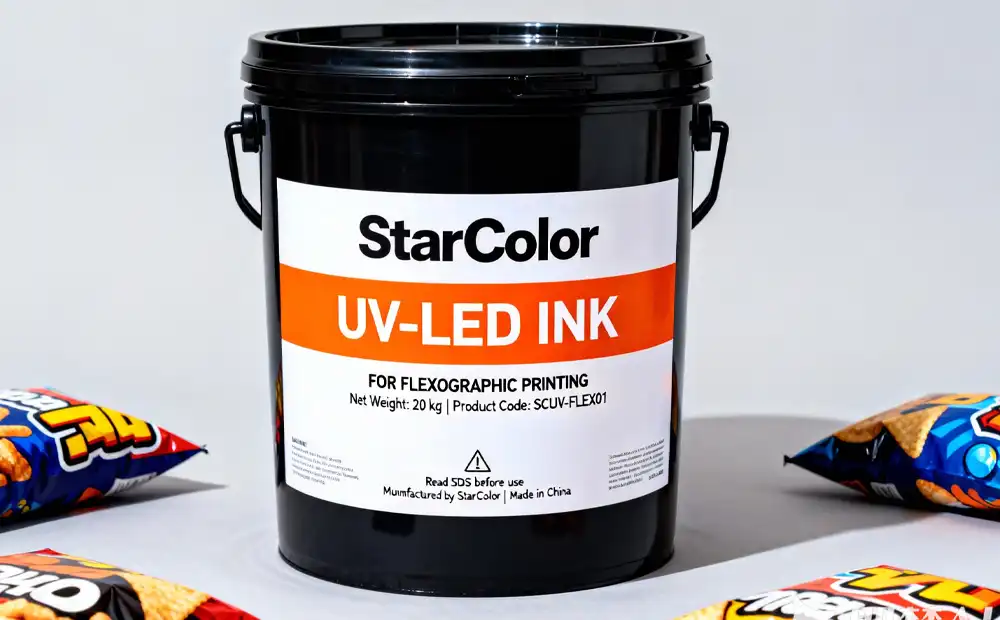
Reliable UV ink manufacturers must provide formulation adjustments for different printing methods, substrates, and application scenarios. Low-end suppliers often only “repack” generic inks.
Typical Red Flags- Answers “all can be used” to LED-UV, food-packaging, or high-speed curing questions.
- Blames your equipment when curing fails or ink peels off.
- No R&D team, patents, or testing equipment.
- Request a custom solution and sample within 72 hours.
- Check if the factory has necessary R&D equipment such as FT-IR or gloss meters.
Warning Sign 3: Unstable Product Quality
UV ink performance—curing, adhesion, and color consistency—must remain stable between batches. Poor quality control leads to major production losses.
Typical Red Flags- Viscosity fluctuates dramatically between batches.
- Color difference ΔE > 1.5 (industry target ≤ 0.8).
- Curing energy requirements inconsistent across batches.
- Request three different batches and test viscosity and ΔE.
- Ask for batch production records and raw-material traceability.
- Run a 5000-meter trial test with random sampling.
Warning Sign 4: Fragile Supply Chain
UV ink relies on resins, photoinitiators, and pigments. Manufacturers with weak supply chains cannot ensure stable delivery.
Typical Red Flags- Promises fast delivery but delays repeatedly after payment.
- Outsources production with no fixed facility.
- Unilaterally increases prices due to raw-material fluctuations.
- Request factory address and annual capacity proof (recommended ≥ 5000 tons).
- Include penalty clauses for delayed delivery.
- Ask for raw-material inventory records.
Warning Sign 5: Poor Service and Zero Technical Support
UV inks require service for pre-sales consultation, on-site debugging, and after-sales troubleshooting. Risky suppliers often disappear once an issue appears.
Typical Red Flags- Only gives vague suggestions like “increase curing energy.”
- Frequently unreachable after delivery.
- Refuses to acknowledge quality issues.
- Request the qualifications of technical support engineers.
- Simulate a troubleshooting scenario to test response speed.
- Ask existing customers about problem-resolution effectiveness.
Conclusion
Selecting a UV ink manufacturer is fundamentally a process of excluding risks and validating true capabilities. Buyers should build a full-spectrum evaluation covering compliance → technical capability → batch stability → supply chain → service.
Reliable manufacturers—such as Starcolor—offer verifiable certifications, rapid formulation adjustments, stable batches, transparent capacity, and professional technical support. With proper assessment, UV inks can significantly boost production efficiency and product performance.